


.jpg)


Docebo vs. TalentLMS — which LMS is right for you in 2026?
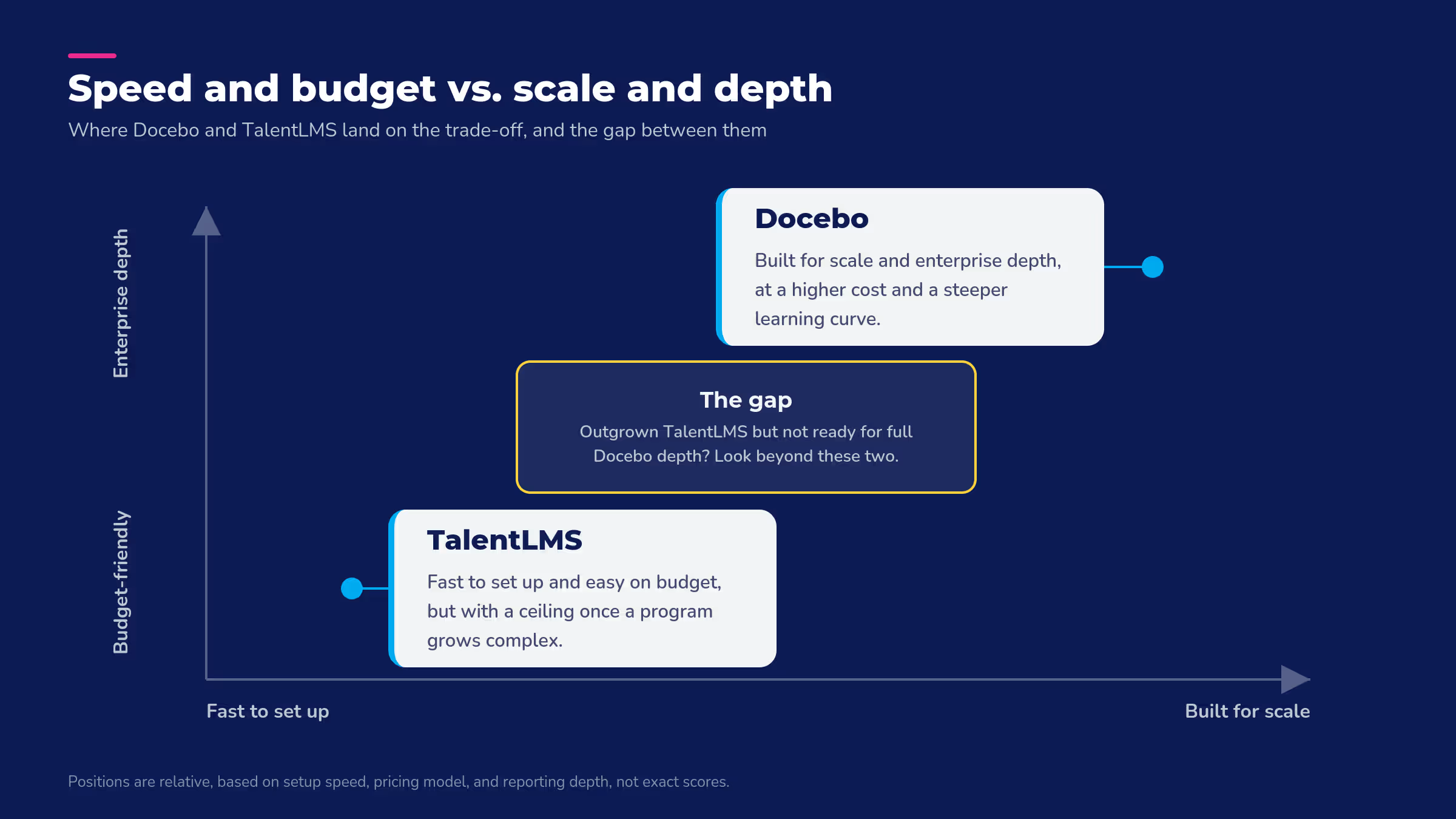
Docebo vs. TalentLMS comes down to a trade-off. Docebo gives you more depth with AI-driven content tools, granular reporting, and room to scale, but it costs more and takes longer to administer. TalentLMS gets you running fast at a lower price, but teams often outgrow it. If neither of these fits your team perfectly, there’s an alternative.
Docebo vs. TalentLMS at a glance
Docebo is built for organizations that need depth, like advanced AI course creation, detailed reporting, and room to grow a large, complex training program. TalentLMS is built for speed, with an intuitive setup, gamification that keeps learners engaged, and a price tag that works for a smaller team.
From daily users, Docebo's per-license cost and admin learning curve are the most common complaints. TalentLMS's ease of use is real, but so is the ceiling teams hit once they outgrow what it can do. Neither one is wrong. The right choice depends on your team's size, budget, and how much complexity you're ready to take on.
And if you don't think either of these fits what you need, you're not out of options.
Attribute | Docebo | TalentLMS |
Pricing | Custom quote only; no public pricing | Published tiers starting at $119 a month |
Ease of use | Steeper learning curve for admins | Fast setup, intuitive for admins and learners |
Best for | Larger teams needing depth and scale | Smaller, budget-conscious teams needing speed |
AI features | AI content creation from a prompt, plus knowledge-check generation and translation | AI content, quiz, and image generation |
Reporting | Detailed dashboards, but rigid for tracking completions | Solid reporting on questions, time spent, and completions |
Compliance | SCORM, xAPI, and AICC support; SOC 2 Type II and ISO 27001 certified | SCORM, xAPI, and cmi5 support; ISO 27001, GDPR, and CSA STAR certified |
Docebo: what it's like to use
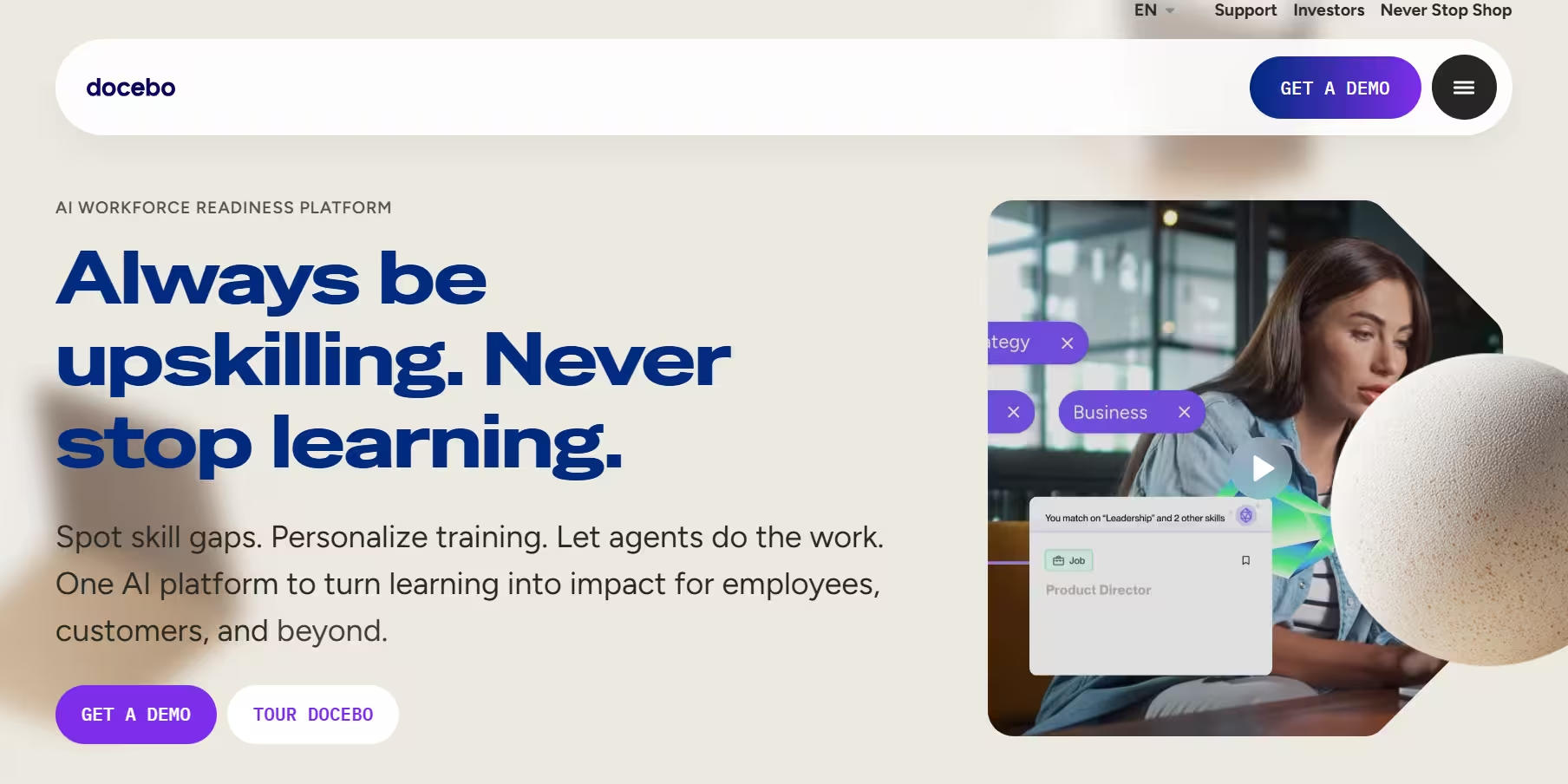
Docebo LMS is a feature-rich learning management system built for organizations running complex, large-scale training programs. It's what people reach for when they need more than the basics.
The interface is a real strength. Despite its depth, one reviewer called it “the best out there” with a clean look and feel.
Reporting and dashboarding are frequently cited as a strength too, with reviewers pointing to easy-to-use customizable reports.
Docebo's AI tools can turn a prompt or document into a structured course, and its “AI-driven features save time” and enhance learning.
Docebo is also highly customizable, allowing for “easy and smart course creation” for different learner types. with granular controls and integrations across a wide range of systems, including Salesforce.
TalentLMS: what it's like to use
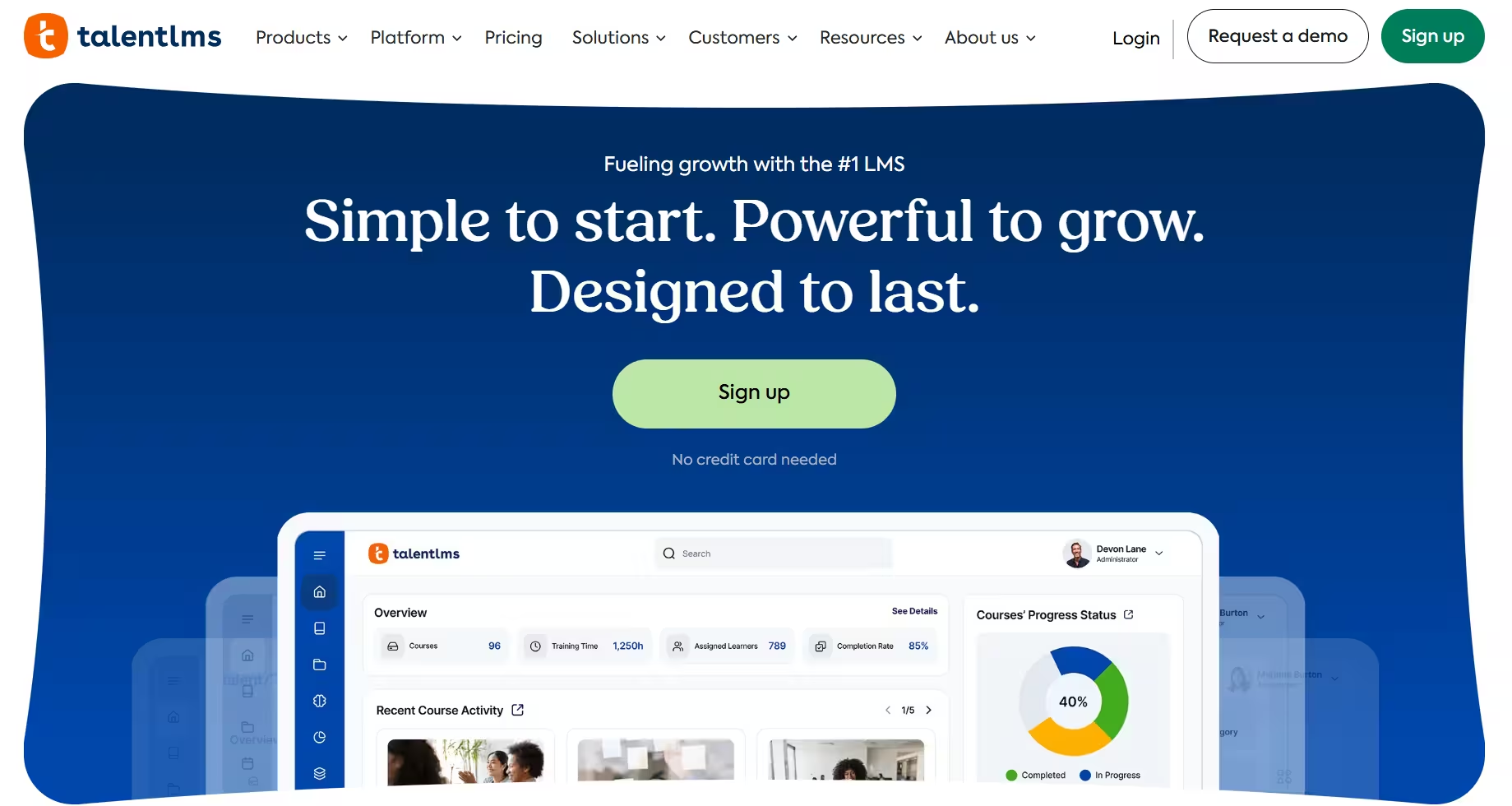
TalentLMS is a good LMS for smaller and mid-sized teams that need to get training running quickly without a steep learning curve.
Its biggest strength is how fast you can get up and running. Reviewers praise TalentLMS for its intuitive interface and say managing courses is “straightforward.”
The pricing is a real draw too. TalentLMS is considerably cheaper than many competitors, which matters if you're a budget-conscious team choosing your first LMS.
TalentLMS also leans into gamification, with leaderboards, badges, and points that make training feel more like a game than an assignment. Its course builder uses a visual, drag-and-drop editor that doesn't require technical expertise, including uploading a PowerPoint and having it automatically converted into course content.
Reporting covers the core metrics well — course completions, time spent, and quiz results. You can also segment training into separate branches for different groups or departments, each with its own branding, and it connects with tools like Zoom and Microsoft Teams.
Where Docebo falls short
Docebo is expensive because it's priced around your active users, not a flat seat fee.
Docebo's pricing page offers two tiers, Elevate and Enterprise, priced by monthly, yearly, or registered active users, but every quote is custom. If cost predictability is important, this might be a factor. One reviewer noted that if one of their team members isn’t using their licence, they couldn’t transfer it to a different user.
Cost isn't the only friction point. Docebo's admin experience is often described as clunky and not intuitive, requiring more steps than it should for basic tasks.
Reporting, despite its visual strength, can be rigid when you need to track something specific. For example, one user noted “limitations with managing annual certifications and retraining.”
A few reviewers weren’t thrilled with Docebo’s customer support. Additionally, its depth can be a double-edged sword because, for some, advanced customization takes time to learn.
Where TalentLMS falls short
TalentLMS's simplicity is also its biggest limitation.
It's described as a “simple” platform that “serves its purpose well for small to mid-sized organizations.” One reveiwer notes that it’s lacking in the “off-the-shelf compliance courses” they like for their learners.
A few specific gaps show up for TalentLMS users. The learner interface, while easy to use has training models that are “not as attention grabbing” as was hoped for.
Check its AI functionality. TalentLMS's TalentCraft tool can generate quiz questions, course content, and images from a prompt. This platform has expanded its AI capabilities lately, so they may have added more since the last time you looked.
One user noted that with their lower tier payment, they couldn’t speak to customer support when they needed it most.
Docebo vs. TalentLMS — features compared
Feature depth is where these two platforms diverge most in marketing, but less in substance than you'd expect. Docebo's AI tools turn a prompt or document into a structured course, with auto-generated knowledge checks and one-click translation into 46 languages, and TalentLMS's TalentCraft covers similar ground, generating course content, quiz questions, and images from a prompt. The bigger difference between these two platforms shows up in reporting, not AI.
Docebo's dashboards are more visual and detailed, but some admins find them rigid for specific tracking needs like completions. TalentLMS's reporting is more straightforward, covering completions, time spent, and quiz results, without as much customization.
Integrations Docebo connects with a broad range of systems, including Salesforce. TalentLMS integrates with tools like Zoom and Microsoft Teams, covering the essentials most smaller teams need.
Both platforms are SCORM compliant, and both support xAPI. Docebo also supports SCORM 2004 and AICC, while TalentLMS adds cmi5 support alongside SCORM and xAPI. If you're migrating content from an older LMS, both can handle standard course packages.
Docebo vs. TalentLMS — best for which kind of team?
Docebo fits larger, enterprise-leaning teams that need depth, like advanced AI, detailed reporting, and room to scale alongside a growing, complex training program. If you have the budget and the administrative bandwidth to manage a more feature-rich system, Docebo's depth pays off.
TalentLMS fits smaller or mid-sized teams, especially ones without a dedicated LMS administrator. Its speed of setup and lower cost make it a practical choice for a team that needs to launch training now and doesn't yet need Docebo's level of complexity. If you're comparing TalentLMS competitors built for growing teams, the deciding factor usually comes down to how much runway you need before you outgrow it.
Before you finalize either one, confirm current SCORM and security certifications directly with the vendor. Compliance details change, and this comparison reflects what's published as of this writing.
Which LMS should you choose?
To choose between two LMS platforms, L&D teams should know their non-negotiables. If budget and speed matter most, TalentLMS is the practical starting point. If depth, AI, and long-term scale matter more than upfront cost, Docebo is the stronger fit.
If you're a small team without a dedicated LMS admin, TalentLMS's setup speed and lower cost usually win out, and Docebo's extra depth won't outweigh that for a leaner team.
If you're running a large or fast-growing program, Docebo's cost is easier to justify. You'll get advanced reporting, AI content tools, and room to scale in return.
Team size matters more than most buyers expect going in. A tool that's simple today can become a bottleneck in a year if your training program grows faster than it can handle.
Admin complexity tolerance is something to consider for whoever will manage the system day to day. Docebo's depth means more to learn upfront.
If you're finding that neither one checks every box, you're not alone and there's an option that balances the best of both.
Where Absorb fits in
If you're weighing Docebo alternatives because Docebo feels like more complexity and cost than you need, and TalentLMS feels like something you'll outgrow, check out Absorb LMS.
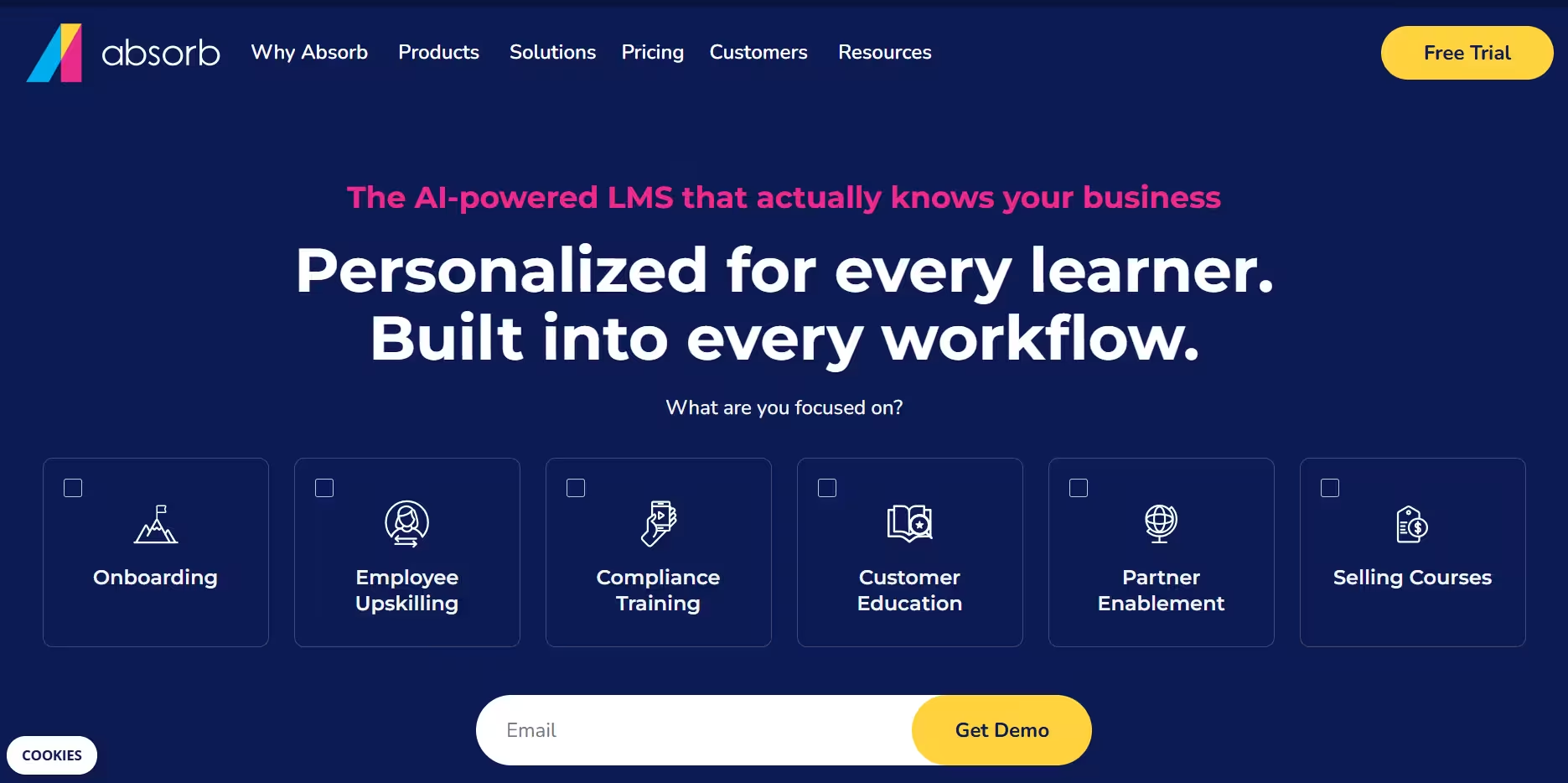
Absorb pairs AI-driven course creation tools that reviewers describe as making it easy to quickly build engaging, professional learning content with an interface reviewers describe as modern, sleek, and intuitive for both admins and learners, without the steep learning curve some Docebo users describe. It's also built with room to grow — reviewers point to the combination of ease of use, administrative functionality, and scalability as a reason they chose it. Absorb aims to fit growing teams both where they are now and where they're headed, without competing on size or price alone.
Looking to make a switch? See what Absorb can do for you.
Frequently asked questions
Which is better: Docebo or TalentLMS?
Neither is better across the board. Docebo is the stronger choice for larger teams that need depth, AI, and scale. TalentLMS is the stronger choice for smaller, budget-conscious teams that need to launch training fast.
Is TalentLMS cheaper than Docebo?
TalentLMS publishes its pricing, starting at $119 a month. Docebo doesn't publish pricing at all, so a direct dollar comparison isn't possible without requesting a quote.
Is TalentLMS SCORM compliant?
Yes. TalentLMS supports SCORM, xAPI, and cmi5 content, so you can bring in courses built with standard authoring tools.
Is TalentLMS easier to use than Docebo?
Generally, yes. TalentLMS is built for fast, intuitive setup, while Docebo's admin experience has a steeper learning curve because of its added depth and customization.
Will I outgrow TalentLMS as my company scales?
It's possible. TalentLMS is often described as a tool smaller teams outgrow once their training program gets more complex. If you're planning significant growth, weigh that against its lower starting cost.
Which has better reporting, Docebo or TalentLMS?
Docebo's reporting is more visual and detailed but can feel rigid for specific tracking needs. TalentLMS's reporting is simpler and covers core metrics like completions and time spent.
Does TalentLMS have AI features like Docebo?
Somewhat, yes. Both platforms' AI tools turn a prompt into course content and generate quiz questions. TalentLMS's TalentCraft also creates images, while Docebo's Creator adds one-click translation into 46 languages.
Is Docebo's customer support reliable?
Experiences vary. Some reviewers describe inconsistent support responsiveness, so it's worth asking directly about response-time expectations during a sales conversation.
What are some alternatives to TalentLMS?
Docebo is one alternative for teams that need more depth. Absorb LMS is another option worth considering if you want a platform built to scale without TalentLMS's limitations.
Is TalentLMS a good LMS?
Yes, for smaller and mid-sized teams that need to launch training quickly without a steep learning curve. It's less suited to larger or fast-growing teams with more complex needs.
Why is Docebo so expensive?
Docebo prices based on active users rather than a flat fee, and it doesn't publish rates publicly. The cost reflects its added depth, like AI tools, advanced reporting, and scalability that smaller tools don't offer.
The bottom line
Docebo and TalentLMS solve different problems. Docebo's depth costs money and admin patience. TalentLMS's simplicity costs you room to grow. And if neither is the perfect fit, there are other options that balance out the best of both platforms.


.avif)
.avif)