.jpg)


If your head is swiveling between Docebo vs. Litmos, you can usually end the confusion if you know the problem you’re solving for. Do you need an LMS that does almost everything, or one that does compliance training and then gets out of your way? If you're an L&D leader, HR training manager, or LMS admin trying to answer that, you're in the right place.
Docebo vs. Litmos at a glance
Docebo’s built for teams that want deep customization and serious reporting, and don't mind a learning curve to get there. Litmos? It’s built for teams that need compliance training live yesterday, with as little admin babysitting as possible.
If neither of those descriptions quite fits, no fear. There's a third option.
Before the comparison starts, a note that every claim here is checked against something you can verify yourself — vendor pricing pages, real Capterra reviews, Litmos's own App Store listing. Where we couldn't verify something, so you can dig in and check things out yourself.
How Docebo and Litmos compare
The first table below covers pricing, ease of use, and who each platform is built for. The second covers what buyers ask about most. How does it deal with compliance training, reporting, and mobile support?
Neither table crowns a winner. The right answer for you depends on what you're optimizing for. (We’ll address that, too.)
Housekeeping note: "SAP Litmos" and "Litmos" are the same product wearing a different name tag. SAP used the "SAP Litmos" name while it owned the business, until Francisco Partners acquired Litmos from SAP in December 2022 and it reverted to plain "Litmos." You'll still see both names floating around in reviews and comparisons.
Docebo and Litmos prices
Attribute | Docebo | Litmos |
Pricing model | Quote-based; tiers start at Elevate and Enterprise, with no public dollar figures | Quote-based; every tier shows "contact for pricing" |
Ease of use | Steeper learning curve, especially for advanced customization | Generally fast to set up and use day to day |
Best for | Teams that need scale and deep customization | Teams that need training live fast with minimal admin lift |
Docebo vs Litmos most-asked-about requirements
Attribute | Docebo | Litmos |
Compliance training | Supports compliance tracking as part of a broader feature set | Built specifically around compliance, with pre-built courses for things like OSHA and harassment-prevention training |
Reporting | Reviewers call it detailed but not always simple to configure | Reviews are split — some call it inaccurate, others call it flexible |
Mobile support | Mobile app available as a paid add on | Free mobile app included, rated 4.6/5 |
Docebo's strengths
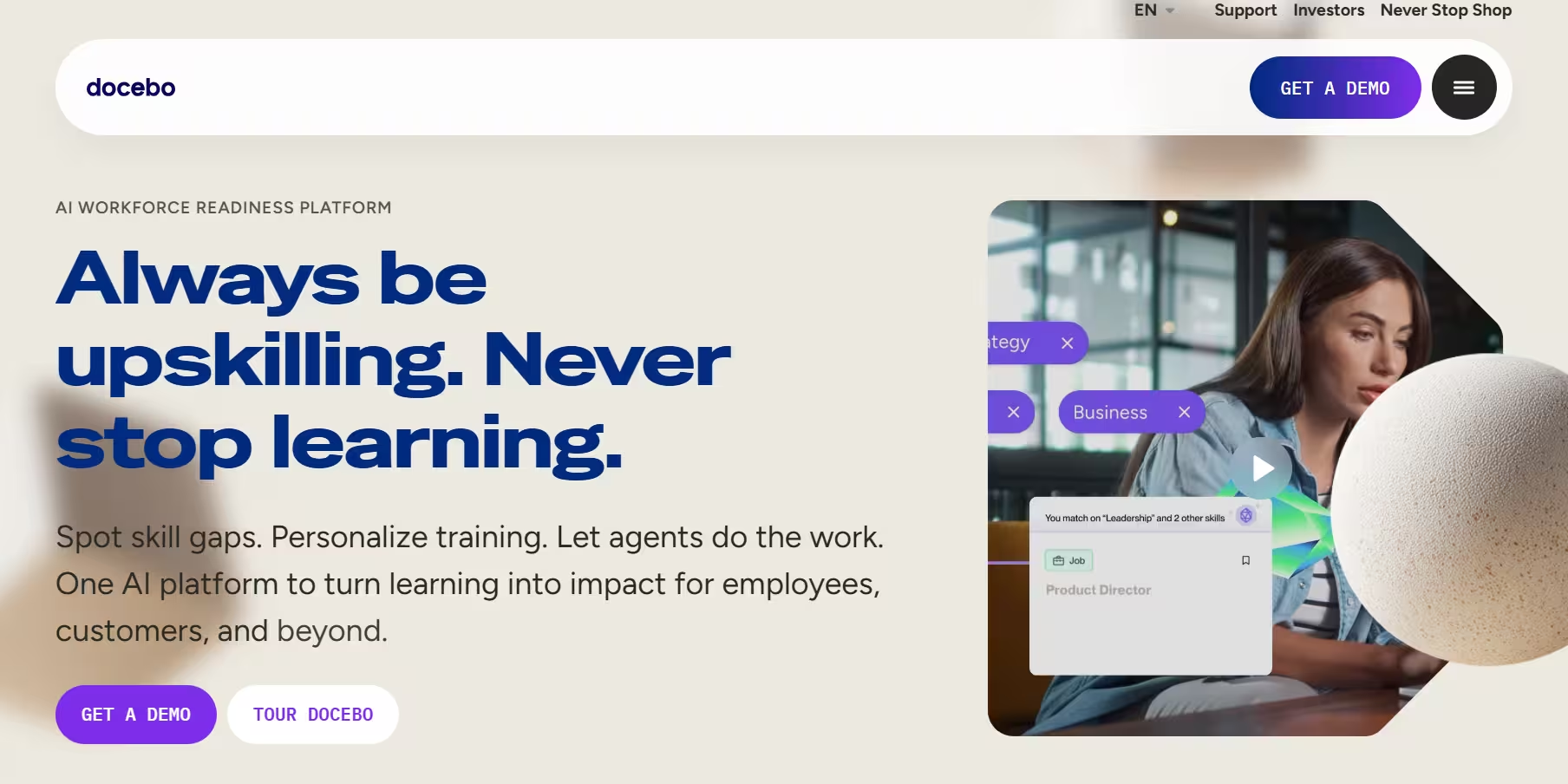
Docebo's biggest strength is depth. Get past the setup curve, and there's not much left the platform can't be bent to do.
Reviewers often land on the interface as the strong first impression. Once Capterra reviewer says the platform is user-friendly as well as being reliable and highly adaptable. adding that it makes it easy to build engaging training.
Docebo also leans hard into AI. Its Creator tool supports "different content types, including multimedia, video, graphics, and presentations.”
Customization is where Docebo really pulls ahead of the pack. One reviewer says that the customizable features allow for the creation of tailored learning paths and interactive features.
That flexibility shows up in integrations, too. Docebo lists more than 400 integrations, including Salesforce, Microsoft Teams, and HubSpot, backed by a reviewer who noted their integration ecosystem was good.
Litmos's strengths
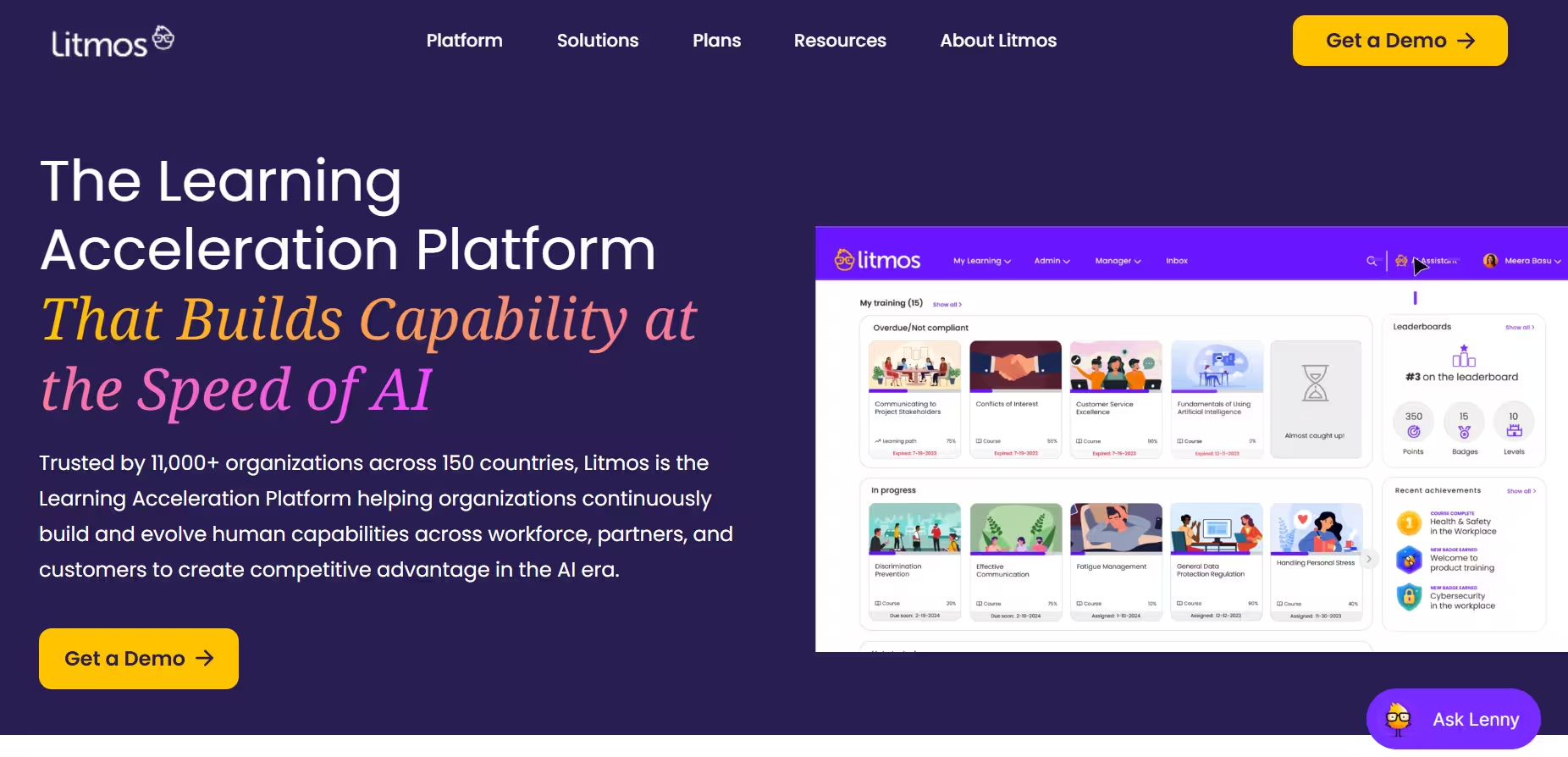
Yes, compliance training is Litmos's home turf, and the platform is built around that one job from the ground up.
Litmos ships with pre-built compliance courses covering things like OSHA regulations, HIPAA, and harassment-prevention training, plus automatic certification renewals and exportable training records for when the auditors come calling. A Capterra reviewer confirmed the basics hold up in practice, noting Litmos is “simple to use and easy to follow” with up-to-date content straight out of the box.
Ease of use is the other place Litmos consistently earns its keep. One training consultant said building a course "is a breeze" once you learn the accepted content formats. That's a fair trade for a platform built to get compliance content live fast rather than support elaborate custom builds.
Customer service also shows up as a real strength, not a footnote. Reviewers described the customer service team as “impressive” and others noted the company actively seeks feedback and acts on it rather than filing it away. One reviewer was happy with the product but said the sales team was pushy.
Docebo's weaknesses
Docebo's weaknesses cluster around cost and complexity, and it's the same coin, just the other side. The qualities that make it powerful are the ones that make it expensive and tougher to learn/harder to manage.
Cost is a common complaint. One reviewer said the platform “can be quite expensive depending on what features you need.” Also, “extra features” may cost extra. Setup carries its own cost, in time instead of dollars. Another reviewer said setup can be complex and that advanced customization can be tough without technical know-how on hand.
Support quality depends heavily on your contract tier, which is its own kind of frustrating. Some reviewers call the team responsive and helpful; others describe support as thin, and one reviewer on a lower tier called it effectively unsupported/non-existent below Enterprise level.
Add up the cost, the setup curve, and support that thins out below Enterprise, and it's not hard to see why some teams start browsing alternatives.
Litmos's weaknesses
Yes, Litmos has a mobile app, and it's actively maintained. It holds a "4.6 out of 5 rating from about 2,500 reviews" on the App Store, with its most recent update landing within the past month.
Reporting has split reviews. One reviewer said “reporting on surveys is very laborious.” Another notes that the reporting is acceptable for a typical user. The platform seems to satisfy people with straightforward reporting needs and frustrates people who need something more precise.
One complaint that is mentioned by several reviewers is that certain features like permissions need improvements.
Docebo vs. Litmos features compared
Strip away the marketing, and the Docebo vs. Litmos (or Litmos vs. Docebo, however you landed here) feature gap comes down to depth versus focus.
On compliance training, Litmos wins on purpose-built depth. It ships pre-built courses, automatic renewals, and audit-ready records, per its own compliance solutions page. Docebo treats compliance as one piece of a much bigger enterprise toolkit, not the whole point.
On reporting, Docebo's dashboards get consistent praise for depth, though building the exact report you want can take real effort. Litmos's reporting draws more mixed reviews: capable enough for straightforward tracking, frustrating for anyone chasing precision.
On mobile and video training, Litmos includes its mobile app by default. Docebo lists its branded mobile app as a paid add-on.
The pattern holds across all three: Docebo goes deeper and asks more of you in return. Litmos goes narrower and asks less. Neither is objectively better. It comes down to whether your team has the time and technical appetite Docebo rewards, or needs Litmos's faster, simpler path to a working compliance program.
Best fit by team size and use case
The best fit usually comes down to three things: how big your team is, how regulated your industry is, and how much internal technical support you have, not the amount you wish you had.
As a standalone Docebo LMS deployment, it tends to make more sense for larger, multi-audience organizations. Think companies training employees, partners, and customers through one system, with IT or L&D operations staff who can handle setup and maintenance without breaking a sweat. Its breadth of integrations, including Salesforce, Microsoft Teams, and HubSpot, matters most if you're already juggling several other business systems that need to talk to your LMS.
Litmos tends to make more sense for small-to-mid-sized teams, especially where compliance training is the primary job the LMS needs to do. If your priority is getting mandatory training assigned, tracked, and renewed without hiring a dedicated LMS administrator to babysit it, Litmos's narrower focus works in your favor.
Before committing either way, confirm any specific integration you're counting on directly with the vendor. Integration lineups shift, and it's worth checking current status rather than trusting last year's feature page.
Which should you choose?
Which is better: Docebo or Litmos? Neither, universally. It comes down to whether you need a platform that grows with real complexity, or one that gets a specific job done without the fuss.
Choose Docebo if you're training multiple audiences, need deep customization and reporting, and have the internal capacity to run a more complex system. The cost and setup time pay for themselves if you're going to use the extra depth.
Choose Litmos if compliance training is your main event, your team is lean, and you want something that works well out of the box without a dedicated admin standing over it. You'll trade some customization and reporting precision for speed and simplicity.
However you frame the search, Docebo vs. Litmos or Litmos vs. Docebo, the underlying decision doesn't change. If you've read this far and neither one sounds quite right, too much platform on one side, not quite enough on the other, that's a real, common third position. That's exactly where we come in.
Where Absorb fits in
Absorb exists for you if you're stuck between these two. Docebo can feel like more platform than you need, and Litmos can feel thinner than you'd like once compliance training is only part of the job, not the whole job.
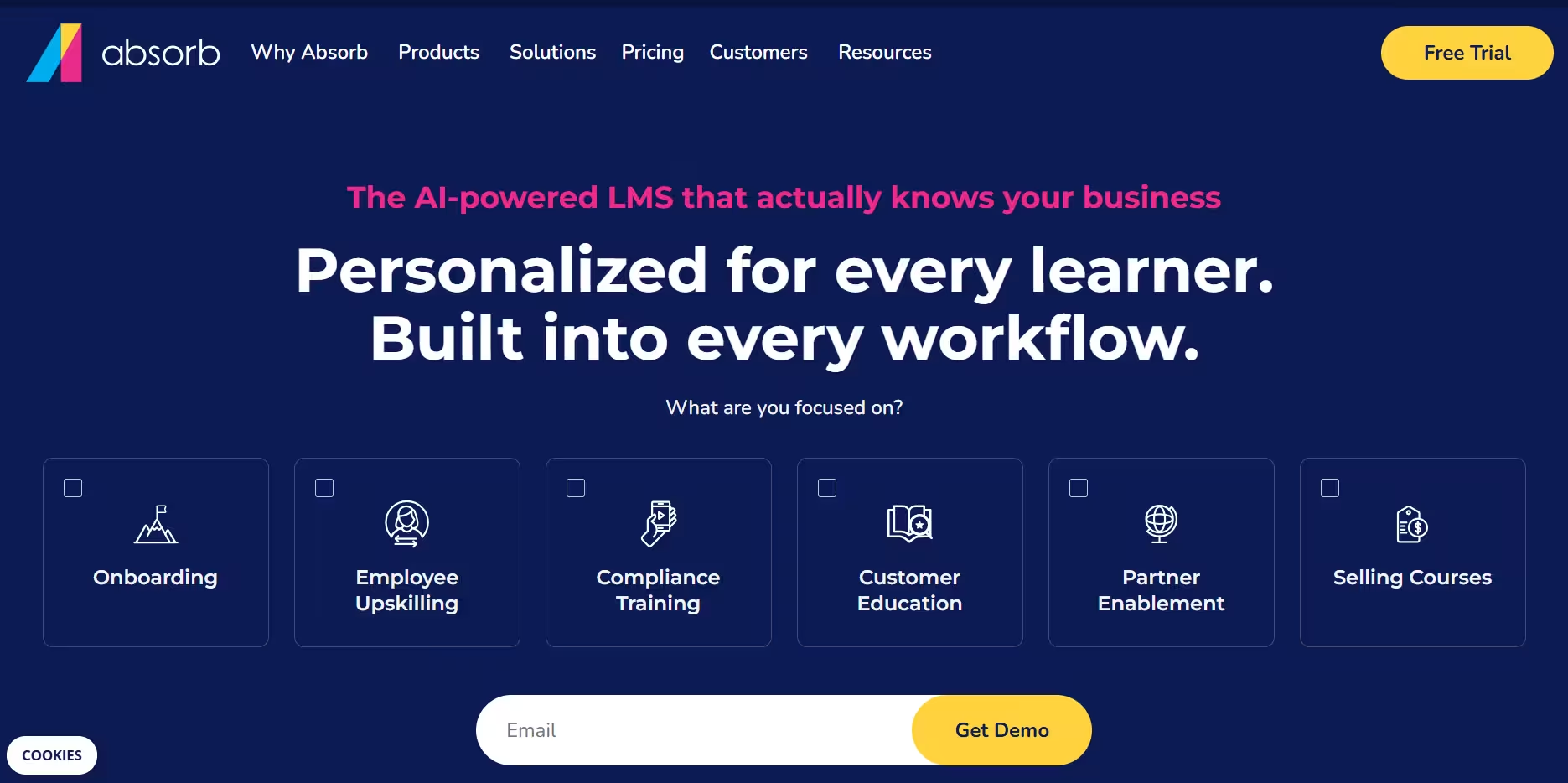
Absorb LMS homepage with headline 'The AI-powered LMS that actually knows your business' and use-case selector showing Onboarding, Employee Upskilling, Compliance Training, Customer Education, Partner Enablement, and Selling Courses.
Aura Create, our AI course-building tool, lets you "upload a document, paste a prompt, or connect to SharePoint or OneDrive," then drafts an outline and builds the course from there, without demanding the setup investment Docebo's deeper customization requires. Reporting and scalability support both internal training and external audiences like customers and partners from one platform, so you're not forced to pick between depth and simplicity.
If you want Docebo's depth without the setup lift, or Litmos's simplicity with sharper reporting, see what Absorb can do for you.
FAQs
Is Litmos good for compliance training?
Yes. Litmos comes with pre-built compliance courses and automatic certification renewals, which is why it's the platform most often chosen specifically for compliance and mandatory annual training.
Does Litmos have a mobile app?
Yes, and it's actively maintained. It currently holds a 4.6 out of 5 rating from about 2,500 reviews on the App Store, with an update released within the past month.
Is Litmos's reporting accurate?
It depends who you ask. Some reviewers report inaccurate or confusing on-screen data, while others say the reporting is detailed and customizable. Treat any single review as one data point, not the full picture.
Is Litmos cheaper than Docebo?
We can't say for certain. Neither company publishes list pricing, and both require a custom quote — see how LMS pricing models compare for context on what drives the cost. Request pricing from both before assuming either is the cheaper option.
Does Litmos integrate well with other systems?
Mostly, though a handful of reviewers describe some integrations as less efficient than expected. Confirm your specific integration is currently supported before you commit.
.avif)