


.jpg)

One "best manufacturing LMS" list, from SafetyCulture's Mitti, promises "10 Best" in the headline, delivers seven, ranks itself #1, and adds a disclaimer that the list isn't ranked. Whenever you're reading a "best LMS for manufacturing" article written by an LMS company, keep a bit of skepticism. Here, instead of asking you to trust a number-one spot, this piece names the criteria that matter on a manufacturing floor, then measures five real platforms, Absorb included, against them.
This guide covers learning management systems specifically. If you're further along than picking a vendor and thinking about onboarding specifically, our manufacturing onboarding software guide goes deeper on shop-floor delivery, multilingual training, and multi-site consistency than the criteria above.
The five criteria that separate a manufacturing LMS from one that just says it is
Shopping for an LMS for manufacturing means looking for everything a standard corporate LMS does, plus handling constraints most office-based training never has to think about. Think workers who don't sit at a desk, regulatory audits that show up without warning, and training records that have to hold up across multiple plants and shifts.
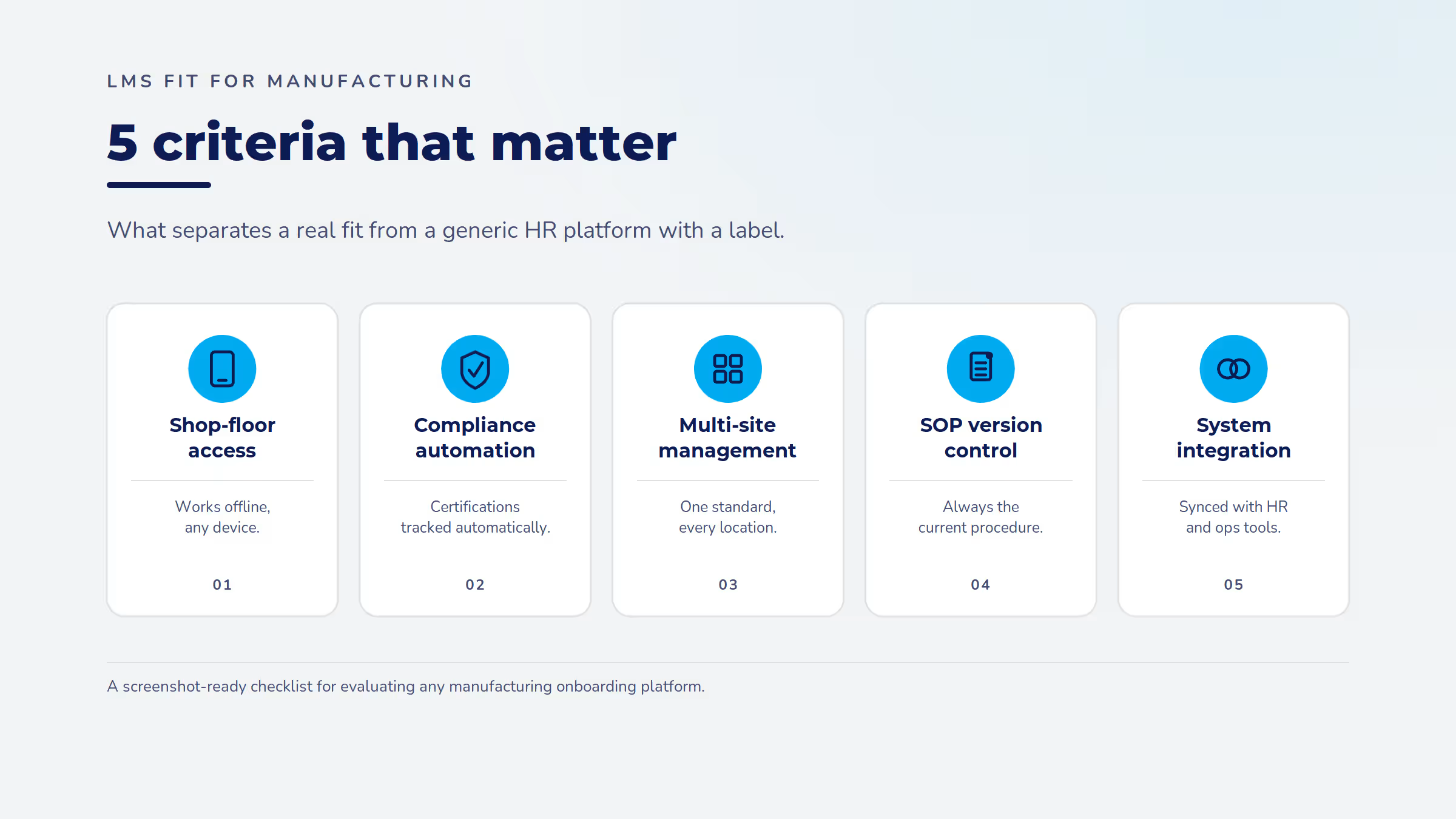
Based on what shows up across manufacturing LMS pages, and what practitioners ask about in places like Reddit and Quora, five criteria separate a platform built for manufacturing from one that just says it works for manufacturing.
- Shop-floor and deskless access. Training that works for someone without a company laptop or a desk, whether that's a QR code on a machine or a kiosk near the line.
- Compliance automation. Tracking and reporting for OSHA, ISO, GMP, or whatever standards your plant answers to, without someone manually assembling an audit binder.
- Multi-site and multi-shift management. The same training standard enforced consistently, whether it's the day shift in Ohio or the night shift in Texas.
- SOP training with version control. When a standard operating procedure changes, the training tied to it needs to change too, with a record of who completed training on which version.
- Integration with what you already run. Think HR systems, and sometimes production or quality systems, without a spreadsheet holding it all together by hand.
We're about to hold five platforms, ours included, up against this list. That's on purpose because it's a lot easier to look good in a "best of" post you also get to grade yourself on, so the least we could do is show our work.
How manufacturing LMS platforms compare
Five vendors (Docebo, Litmos, Tovuti, ProProfs, and Absorb) measure up on what they state, in their own words, on their own sites.
Docebo automates audit trails, reporting, and recertification for OSHA, CGMP, and ISO requirements (straight from its own manufacturing page). That's compliance automation, stated plainly. It's exactly the kind of specific, checkable claim we asked every platform here to make.
Litmos delivers OSHA, GMP, and ISO training with automated assignments, completion tracking, and audit-ready reporting "across every site", by its own description. That's language that speaks to multi-site management as much as compliance.
Tovuti leans hardest into the multi-site criterion by name. Its manufacturing page promises to "standardize and prove readiness at all locations," centralizing attestations, certificates, and approvals, and surfacing exceptions in dashboards for OSHA, ISO, and customer audits.
ProProfs is the one platform here built specifically around shop-floor access. Its training tool supports printable QR codes that go on a machine, a safety station, or an equipment manual, so a deskless worker can reach training without logging into anything. Worth knowing before its own "10 Best" list impresses you too much, though. It ranks itself #1 on that list, ahead of nine named competitors, including us.
Absorb — yes, that's us, and no, we didn't get to skip our own homework. We cover similar regulatory ground to Docebo, Litmos, and Tovuti on paper. We name OSHA, ISO, EPA, HACCP, and FDA content in our pre-built course library on our own manufacturing page. In the interest of the same honesty we're asking of everyone else here, that's a content-library claim, not the same kind of automated audit-trail feature Docebo, Litmos, and Tovuti describe, so we're not dressing it up as identical.
What we can point to instead is a testimonial describing a switch from a manual OSHA training process to a multi-site rollout on our platform, from a verified enterprise manufacturing user on that same page. It's a testimonial to a real process and speaks more to the multi-site criterion than to compliance automation specifically.
Five vendors made five specific, checkable claims. Naturally, no single one is automatically "best" for every manufacturing plant:
Vendor | What they verifiably do | Best-fit criterion |
Docebo | Automates audit trails, reporting, and recertification for OSHA, CGMP, and ISO | Compliance automation |
Litmos | Automated OSHA/GMP/ISO training assignments and audit-ready reporting "across every site" | Compliance automation and multi-site |
Tovuti | Centralized attestations, certificates, and dashboards for OSHA/ISO/customer audits across locations | Multi-site compliance tracking |
ProProfs | QR-code training access that needs no login | Shop-floor and deskless access |
Absorb | Pre-built OSHA/ISO/EPA/HACCP/FDA compliance course content, plus a customer testimonial (not a named case study) describing a multi-site rollout | Compliance content coverage and multi-site rollout |
None of the five was scored on SOP version control specifically because none of the pages we checked made a clear, checkable claim about it. But if it's the criterion that matters most for your plant, ask directly in a demo.
Manufacturing training software vs. a dedicated LMS
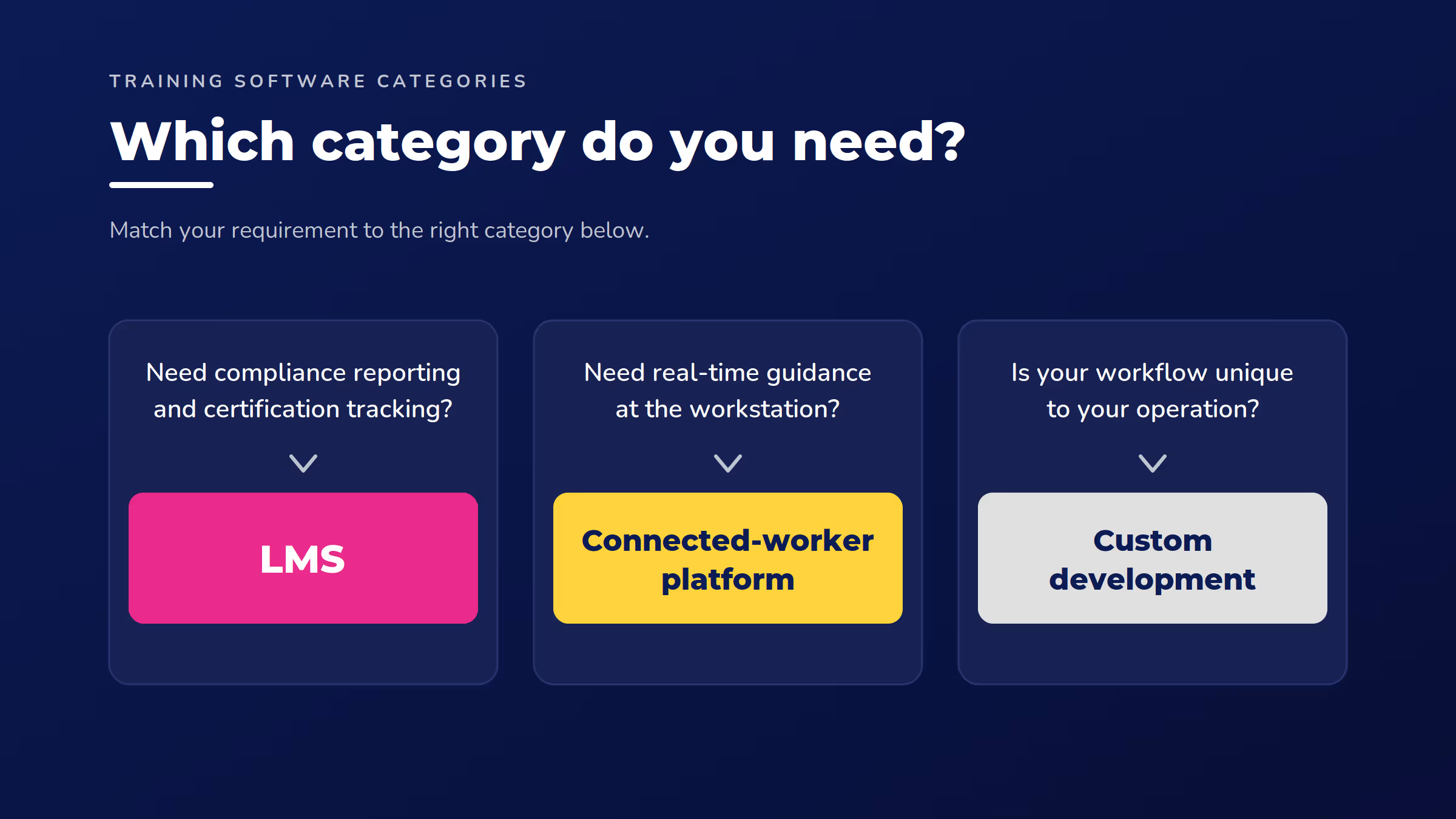
If you searched "manufacturing training software" instead of "LMS," you've probably noticed the results don't look like a clean list of LMS competitors. That's because "manufacturing training software" is a broader category, and not every result on it is comparable to an LMS.
In our research, that term pulled in true LMS platforms (some of the same ones above) alongside a connected-worker platform, a custom software development shop, and a couple of skills-management tools. Tulip is a good example. It markets itself as a "frontline operations platform" rather than an LMS, built around real-time, on-the-line guidance (think digital instructions and step-by-step prompts at a workstation), rather than structured courses and certification tracking.
If you need structured courses, certification tracking, and compliance reporting you can hand to an auditor, you want an LMS, the kind of platform compared above. If you need in-the-moment guidance at the workstation itself, a connected-worker platform is probably the better fit, and it's not really competing with an LMS so much as sitting next to one. And if your training workflow is genuinely unique to your operation, custom development is worth a conversation, though it comes with a longer build timeline and an ongoing maintenance cost an off-the-shelf platform doesn't carry.
Common mistakes when choosing an LMS for manufacturing
Buying the wrong LMS for a manufacturing environment usually means picking a platform built for a different problem, not a bad platform.
Choosing a generic corporate LMS
It might handle onboarding and compliance training fine for an office, but if it has no answer for shop-floor or deskless access, your frontline workforce becomes the group least served by the training that's supposed to reach them.
Treating compliance as an afterthought
OSHA penalties aren't small. As of 2026, a serious violation can run up to $16,550, and a willful or repeated one up to $165,514. Confirm compliance-audit support before you buy, not after an inspector asks for records you can't produce.
Underestimating a multi-site rollout
What works cleanly for one plant doesn't automatically scale to five, especially across different shifts and time zones.
Skipping SOP version control
If a procedure changes and the training tied to it doesn't update with it, you end up with a paper trail that actively misleads an auditor instead of protecting you.
Trusting an unsourced "best of" list
If a comparison doesn't say how it reached its conclusion, or ranks its own product first without explaining why, that's worth noticing before you take its word for anything, including this one. Check our sourcing above so you don't have to just take it on faith.
Frequently asked questions
What is the best software for manufacturing?
This guide covers learning management systems specifically. "Manufacturing software" broadly could mean ERP, MES, or quality-management systems too, different categories solving different problems, not something one article can fairly compare in a single pass.
What are the top LMS systems used in manufacturing today?
Based on what we could independently verify, Docebo, Litmos, Tovuti, ProProfs, and Absorb all build specifically for manufacturing use cases like compliance tracking and shop-floor access. We limited this list to vendors we could research and verify closely enough to compare fairly, not every LMS that happens to work for manufacturers.
Is manufacturing training software the same as an LMS?
Not always. Some manufacturing training software is a true LMS. Some of it, like connected-worker platforms, solves a different problem entirely. See the section above for how to tell the difference.
Getting started
Start by matching the five criteria above to your plant's actual gap. If your biggest problem is proving compliance during an audit, weight that criterion heaviest. If it's getting training to people who don't sit at a desk, start there instead.
From there, shortlist two or three platforms, ask each one the same questions, and see who answers plainly instead of just confidently. That includes us. Go poke at how Absorb handles compliance tracking or a multi-site rollout for your own plant, and judge for yourself. That's a better test than taking anyone's word for a number-one spot, ours included.
.avif)


.avif)