


.jpg)

What's manufacturing onboarding software?
Manufacturing onboarding software manages everything that happens between a job offer and a fully productive new hire. That includes paperwork and compliance documentation, safety certification tracking, and, when it's done right, the training that gets someone competent at their job. Most platforms on the market handle only the first two.
Today's options split into two camps. General HR platforms treat manufacturing as one industry vertical among many. It's the same core paperwork-and-compliance engine used for retail or healthcare, with a manufacturing label attached.
Workstation guidance tools go the other direction. They deliver step-by-step visual instructions right at the machine, focused on the task in front of a worker rather than their broader development.
Both solve real problems and neither solves the gap between them, which is the building and tracking the skills a new hire needs over their first weeks and months, not just the forms they signed day one.
An LMS-based approach to manufacturing onboarding treats compliance and certification tracking as table stakes, then adds what the other two approaches miss, including structured training content, skills and competency tracking, and a record of what someone learned (not just what they clicked through).
If you're evaluating manufacturing onboarding software, the best option is whichever one can prove a new hire is competent, not just compliant, with reporting that shows skills gained and time-to-productivity improving, not just course completions logged.
Why manufacturing onboarding isn't the same as general HR onboarding
HR software built for a general audience treats onboarding as a checklist of forms, policies, and an org chart. Manufacturing onboarding starts with the same checklist, then adds a layer most HR platforms were never built for. That layer is safety training that's legally required, tied to specific equipment and processes, and updated every time a regulation, a machine, or a process changes.
This isn't optional polish. OSHA's own research found that new employees face a higher injury rate than experienced workers, which is why so many federal safety standards build training requirements directly into the regulation. A generalist HR tool can store a certificate. It can't build, deliver, and update the safety training that certificate is supposed to represent.
The best HR software for manufacturing treats that training as core functionality, not an add-on bolted onto a general onboarding module.
Pre-boarding makes the same point in miniature. Background checks, system access, paperwork... It's tempting to treat pre-boarding as the compliance floor and stop there. But candidates are already forming an opinion of you as an employer before they show up.
“First impressions matter enormously. Even when the pre-boarding process can be tedious — background checks, system setups, paperwork — it doesn't have to feel that way. Candidates are nervous, and they're forming their opinion of you as an employer before they've even started.” —Maria Curtis, Senior Talent Acquisition Coordinator
The same holds true in any industry. In manufacturing, where pre-boarding often includes safety orientation before someone sets foot on the floor, getting it right matters even more. The best manufacturing onboarding software treats compliance as the floor, not the finish line. It automates what has to happen so people can focus on delivering training well, from day one.
The (big) cost of getting manufacturing onboarding wrong
Bad onboarding costs manufacturers in three places at once. People leave before they're productive, injuries concentrate in the weeks right after they start, and revenue targets slip because the workforce plan didn't account for how long ramping really takes.
The first two are connected more directly than most HR teams realize. A peer-reviewed study of a U.S. household-appliance manufacturer tracked nearly 3,800 newly hired hourly workers and found that 31% left within 60 days of hire. Workers who visited the occupational health center in that same window were more than twice as likely to be terminated.
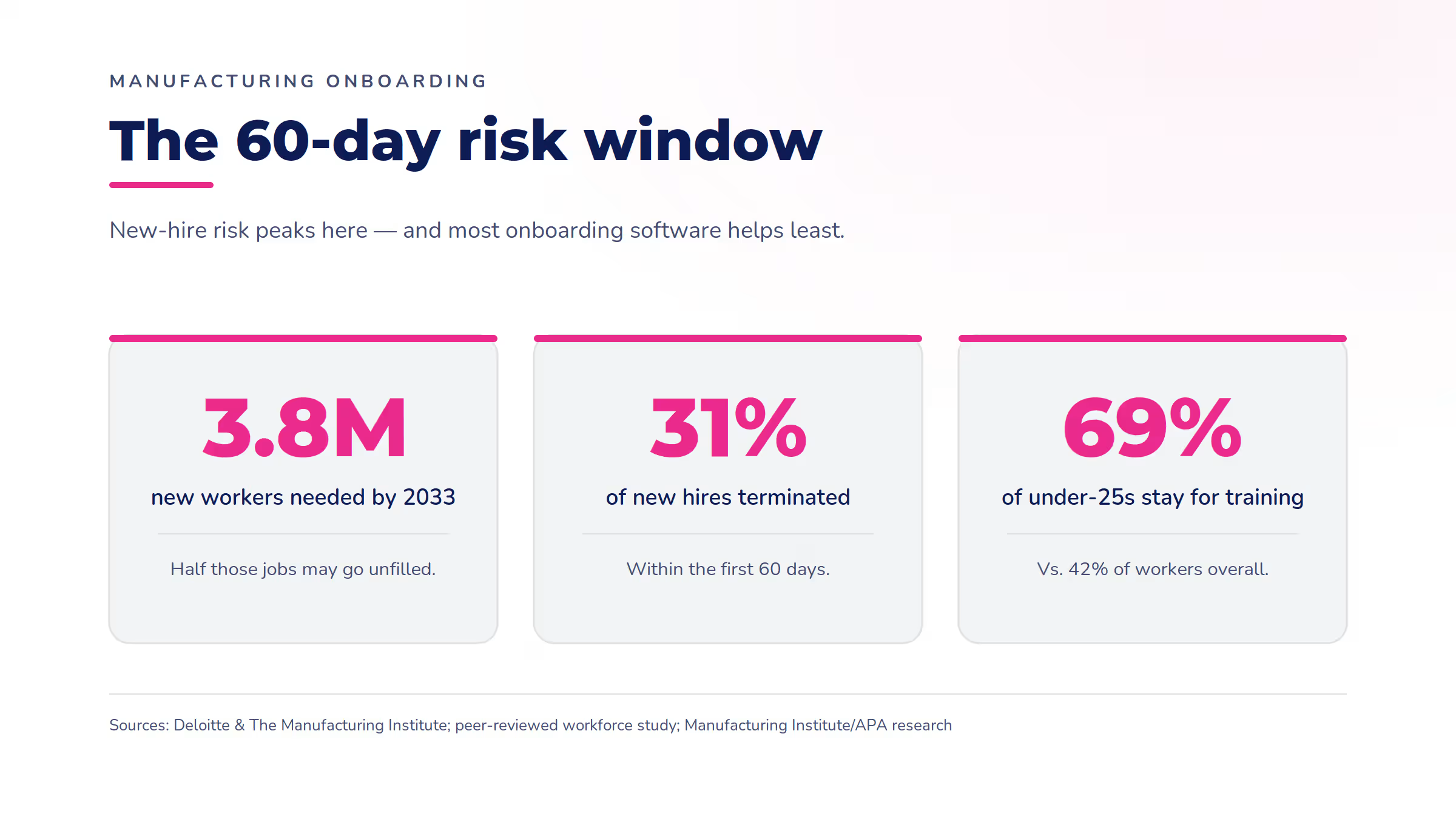
In manufacturing, an early risk of higher injury and early turnover move together. With the industry already projected to fall short of the workers it needs through 2033, every early departure doesn't just hurt one plant's turnover number. It deepens a shortage the whole industry is already fighting.
The third cost is missed targets tied to a workforce plan that assumed people would ramp faster than they do. Devan Graham, Senior HR Business Partner at Absorb, frames ramp time as a planning input, not an HR statistic: “Ramp time isn't just an HR metric, it's a business calculation. If you need 35 fully ramped employees by a certain date and you know it takes six months to ramp, you can work backwards to pinpoint when hiring needs to start. Onboarding time is a variable in hitting your revenue targets.”
The most common mistake compounds all three costs at once. It's cramming everything into day one. Overloading new hires with paperwork, policy walkthroughs, and safety training in a single sitting builds information overload, not competence, right when retaining that safety training matters most.
Spreading training across the first weeks, with clear checkpoints for what someone should know at each stage, protects the ramp-time math and the safety numbers together.
From paperwork to competency: what manufacturing onboarding software should do
Manufacturing onboarding best practices build toward a new hire who's genuinely competent, not just compliant. That means the software behind those practices needs to do more than track documents.
Three things separate a paperwork tool from a training tool:
- Compliance and certification tracking. The table stakes every competitor already offers, including safety sign-offs, required credentials, and renewal dates.
- Training content. Courses, job aids, and refreshers that teach the skills a role requires, not just a policy someone acknowledges.
- Skills and competency tracking. Where most platforms stop short. A record of what a person can do, updated as they cross-train, get certified, or move roles, not a one-time intake checkbox.
That third piece is also where the retention data points. In a Manufacturing Institute study conducted with the American Psychological Association, 65% of workers under 25 cited career opportunities as a reason for staying, and 69% cited training specifically, both well above the 42% who said the same across all age groups.
The same study found a gap between how satisfied senior leaders are with training and development (94%) and how satisfied frontline workers are (66%). Younger, frontline workers, the group manufacturers most need to retain, are also the group most likely to leave over how little investment they see in their own development.
This data makes the case for treating onboarding as day one of an ongoing training relationship instead of a task that ends at week one. It's also the actual difference between “onboarding software” and an LMS. Onboarding software, on its own, is usually scoped to forms, checklists, and a welcome sequence for the first few weeks.
An LMS carries that same new hire through certification renewals, cross-training, and skills development for as long as they're on the team. It should also connect to the systems you already run, syncing employee and role data with your HR system, and where it matters, pulling shift or equipment context from your ERP or MES so training assignments match what someone's doing on the floor.
A short checklist for evaluating any manufacturing onboarding software:
- Does it track required certifications and renewal dates automatically?
- Can it deliver and update real training content, not just documents to acknowledge?
- Does it report on skills and productivity, not just completions?
- Does it integrate with the HR and operations systems you already use, so nobody re-enters the same employee data twice?
Reaching frontline and deskless workers: delivery that fits the shop floor
Manufacturing onboarding software only works if it reaches people on the floor: no desk, no company email checked daily, often split across shifts and sometimes languages. Delivery is where most platforms fail. They're mobile-friendly in theory, hard to use in practice.
Absorb built Frontline specifically for that reality. It's mobile-first, so training loads cleanly on a phone or shared kiosk device instead of a scaled-down desktop course. It works offline, so a plant with spotty connectivity doesn't leave workers stuck mid-course.
Content ships as short, focused microlearning modules that fit into a break or a shift changeover instead of pulling someone off the line for an hour. It's also built into the flow of daily work rather than a separate destination, so a worker can pull up the right module right before doing an unfamiliar task, not just during a scheduled training block. And it still handles compliance and certification tracking, HR system integration, and reporting that scales across multiple sites without multiplying the admin work.
Two examples from Absorb's own customers show what that looks like in practice. Mister Car Wash used Frontline-style onboarding to bring training to a highly deskless, high-turnover workforce and cut turnover by 20%, while streamlining how training gets managed across locations. A&W Canada used the same approach to standardize training across 900 locations. That turned what used to be inconsistent, location-by-location training into one program every site delivers the same way.
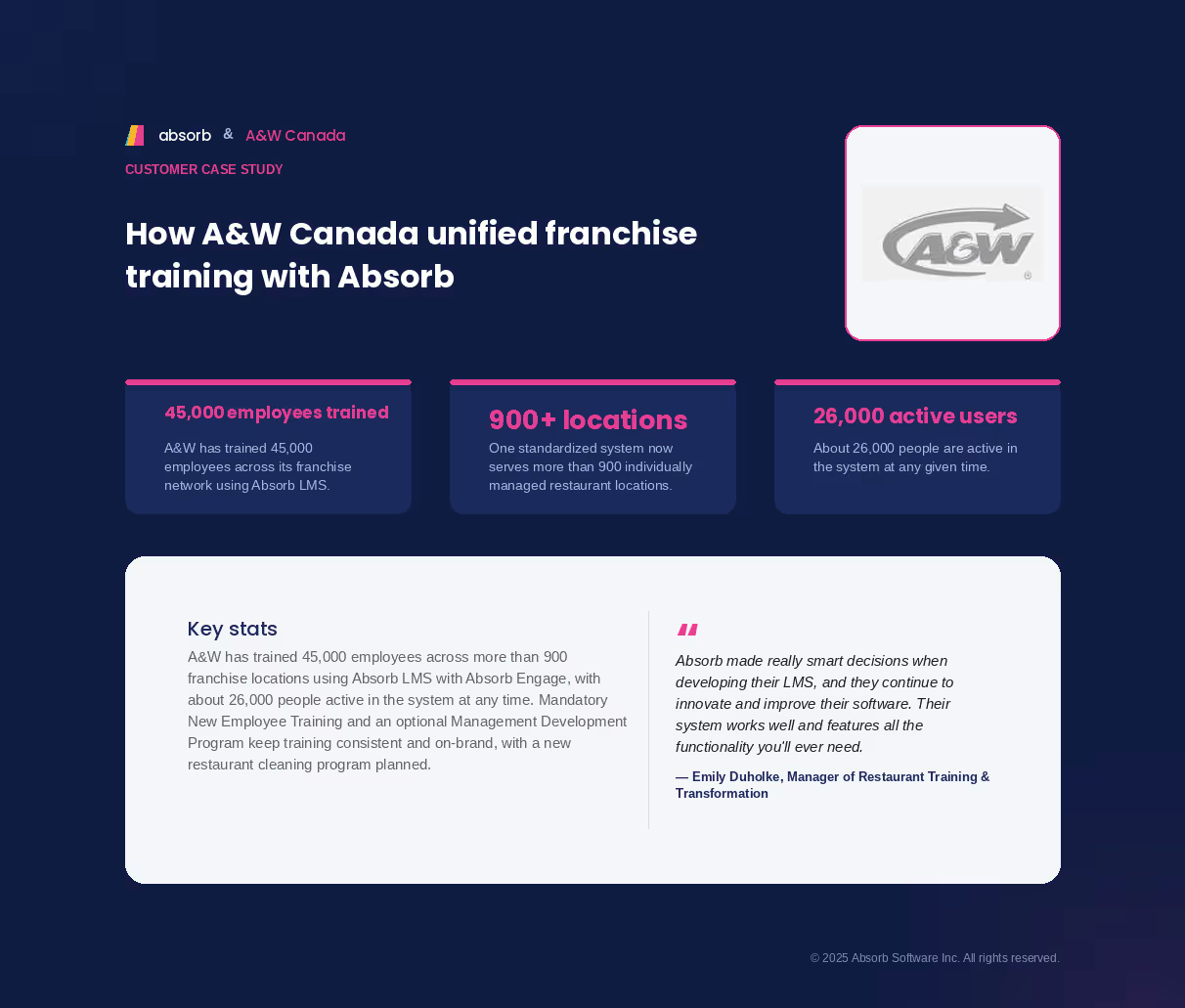
That consistency matters more in manufacturing than almost anywhere else. A new hire trained on one line, in one plant, needs to hit the same safety and skill standard as a new hire trained on a different line in a different plant, even if they're on different shifts, speak different first languages, or started on different days. Multi-site consistency is what makes a certification mean the same thing everywhere it's issued.
Multilingual delivery follows the same logic. Safety training that exists in only one language only protects the workers who read that language fluently, leaving everyone else on the floor exposed. Content built to deliver in multiple languages, from the same source material, closes that gap without asking training teams to maintain parallel course libraries by hand.
For workers who share a device — a kiosk at the start of a line, a tablet mounted near a workstation — the software needs to make handoffs between shifts frictionless. Each worker logs in quickly and picks up where their own training left off, without a supervisor manually tracking who used the shared device when. It's a small mechanical detail competitors rarely mention, and it's exactly the kind of thing that determines whether shared-device training gets used or skipped.
None of this requires trading depth for accessibility. The same platform that delivers a two-minute safety refresher to a phone on the floor can also run the certification tracking, skills reporting, and content authoring that make manufacturing onboarding a training system instead of a paperwork one.
If you're past diagnosing the gap and ready to shortlist vendors, our best LMS for manufacturing comparison scores five real platforms, Absorb included, against the criteria that matter most on a shop floor.
Measuring onboarding success in manufacturing
The easiest number to report on manufacturing onboarding, course completions, is also the least useful one. It tells you someone clicked through the material, not whether they can do the job, or whether they're likely to stay.
Troy Powell, Director of Human Resources, notes “Completion is the easiest thing to measure and the least useful. What you actually want to know is: did this process make someone productive faster, and did it make them feel like they made the right choice joining? Those are two very different questions from whether someone clicked through seven courses in their first week. The organizations that get onboarding right are the ones that design for both — the ramp and the relationship.”
Three metrics get closer to that answer:
- Time-to-productivity. How long it takes a new hire to hit full output or quality standards, not just finish training. This connects directly to the ramp-time planning problem covered earlier.
- First-90-day retention. Shows whether the process is helping people succeed, or just processing them through.
- Safety incident rate among new hires specifically, tracked separately from your overall rate. Shows whether training is closing the early-tenure risk gap or just checking a box.
None of these are hard to pull from onboarding software built for training, not just documentation. The same reporting that tracks certifications and skills should surface these numbers without a separate manual process.
When evaluating manufacturing onboarding software against these metrics, ask what it reports on:
- Can it show time-to-productivity by role, not just by department?
- Does it break out first-90-day retention for new hires versus overall turnover?
- Can safety-incident data be filtered to early tenure specifically?
A platform that answers yes to all three gives HR and operations leaders the same picture. That matters because, in manufacturing, those two groups usually have to agree before an onboarding investment gets approved.
What's next: from structured training to rehearsed competency
Structured training and better metrics solve most of the onboarding-as-competency problem. The piece still missing across the industry, including at Absorb, where it's coming soon rather than available today, is a way to practice the conversations training can't fully prepare someone for: a safety escalation, a difficult shift handoff, a tense conversation on the floor.
Aura Rehearse (coming soon!) does that. A learner has a genuine back-and-forth conversation with an AI character grounded in your own policies and course content, and the conversation gets scored against a rubric your team defines, not just marked as a completion.
Chris Ball, Technical Product Marketing Manager at Absorb, describes the gap it's meant to close:
“Every LMS on the market can tell you a learner finished the course. Almost none can tell you whether that person can actually hold the conversation.”
Rehearse a preview, not a feature you can turn on yet. But it points toward what Troy Powell, Absorb HR, describes as “a continuous experience, not a series of separate handoffs,” one that builds, tests, and proves competence instead of just documenting it.
Frequently asked questions
What is the best onboarding software?
There's no single best onboarding software. The right one depends on what you're onboarding people into. For most organizations, the best option tracks compliance and paperwork automatically, delivers real training content instead of documents to acknowledge, and reports on skills and productivity, not just completions. If your workforce includes shift workers or deskless employees, mobile and offline access matter as much as any feature on the list.
What is the best HR software for manufacturing?
The best HR software for manufacturing treats safety and skills training as core functionality, not an add-on. Look for certification tracking with automatic renewal alerts, training content that can be updated as processes and regulations change, and integration with the HR systems you already run, rather than a general HR platform with a manufacturing label attached.
What software is used for onboarding?
Most organizations use one of three types. That includes general HR onboarding software for forms and checklists, workstation guidance tools for step-by-step task instructions on the floor, or a learning management system for structured training, certification tracking, and skills development that continues past the first week. Manufacturers increasingly need the third, because the first two don't build or track actual competence.
What are the 5 C's of new hire onboarding?
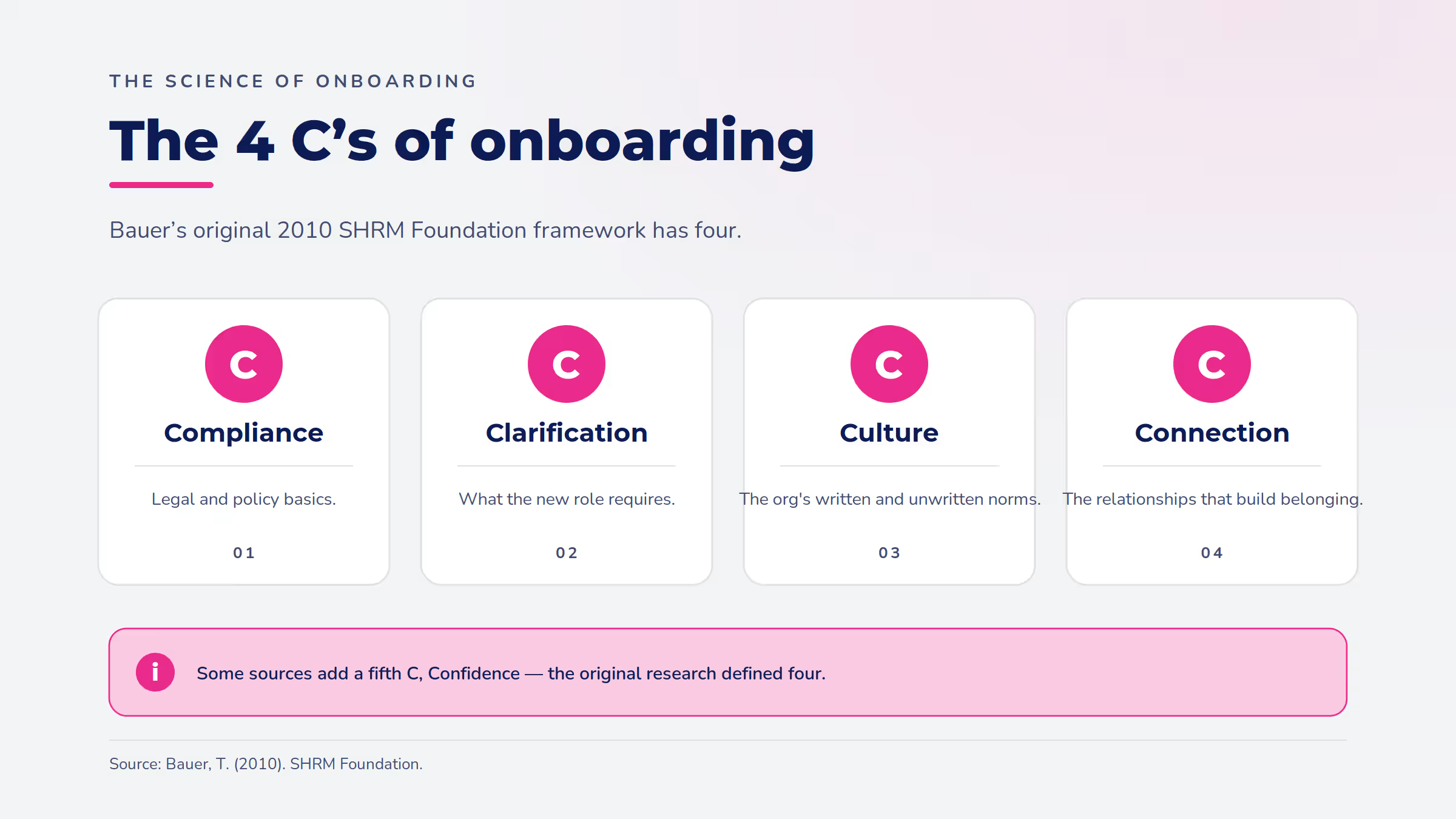
The framework, from Talya Bauer's 2010 research for the SHRM Foundation:
C | What it means |
|---|---|
Compliance | Basic legal and policy-related rules and regulations |
Clarification | Understanding the new job and what's expected |
Culture | Organizational norms, both formal and informal |
Connection | The interpersonal relationships and information networks new hires need to build |
How long should manufacturing onboarding take?
There's no universal number, because it depends on role complexity and how much certification is needed. What matters more than picking a fixed timeline is designing checkpoints, what someone should know and be able to do at 30, 60, and 90 days, so training is paced instead of front-loaded into day one.
What are common mistakes manufacturers make when onboarding new hires?
The most common mistake is cramming paperwork, policy, and safety training into a single first day, which overwhelms new hires right when safety information retention matters most. A close second is measuring success by course completions instead of time-to-productivity, retention, and early-tenure safety incidents. Those are the numbers that show whether onboarding worked.
Compliant isn't the finish line
Manufacturing onboarding software that only tracks paperwork will always max out at compliant. The software that closes the gap treats onboarding as day one of an ongoing training relationship — carrying a new hire through certification, skills development, and eventually rehearsed competency, not just a signed form.
Absorb's Frontline is built for exactly that shift: mobile-first, offline-capable training that reaches every shift and every plant, not just the ones with a desk.
If your onboarding process still measures success by paperwork completed, you don't need to overhaul the whole platform to find out where you stand. Pick one metric — time-to-productivity, 90-day retention, or early-tenure safety incidents — and track it for your next cohort. That's the fastest way to see whether paperwork or training is the real bottleneck.
.avif)

.avif)
