


.jpg)

Every "best Thinkific alternatives" roundup on the internet has the same flaw... The company writing it is one of the alternatives. Teachable ranks Teachable first. Podia ranks Podia first. See what’s happening here?
This one's different because we don't sell courses. We build the software companies use to train their own people — and more and more, the same people training employees also need to teach customers. That gives us a strange advantage on a crowded topic. We can tell you the truth about which Thinkific competitors are worth your money, because none of them are us.
First, we’ll take an objective look at platforms like Thinkific — the ones built to sell and deliver online courses — with pricing checked directly against each vendor's own site. Then, for the smaller group of readers whose training needs have outgrown course selling altogether, we’ll tell you what your next step might be.
Why people look for a Thinkific alternative
Most people don't leave Thinkific over one dealbreaker. They leave because three small frictions pile up. The cost climbs faster than expected, the design tools feel boxed in, and there's nowhere for students to talk to each other.
Start with cost. Thinkific's plans run from $40 a month billed annually for Basic up to $219 a month for Grow, plus a custom Plus tier for larger operations. On top of that, Thinkific charges a flat 2.9% processing fee on every sale — not the tiered fee structure you'll see quoted on other "alternatives" roundups, which is often out of date.
Then there's design. Thinkific's own feature list is solid for course delivery — video hosting, quizzes, certificates, drip content — but it wasn't built for community. There's no discussion feed, no member directory, no live-event hub that’s baked in. If your students want to talk to each other, you're bolting on another tool.
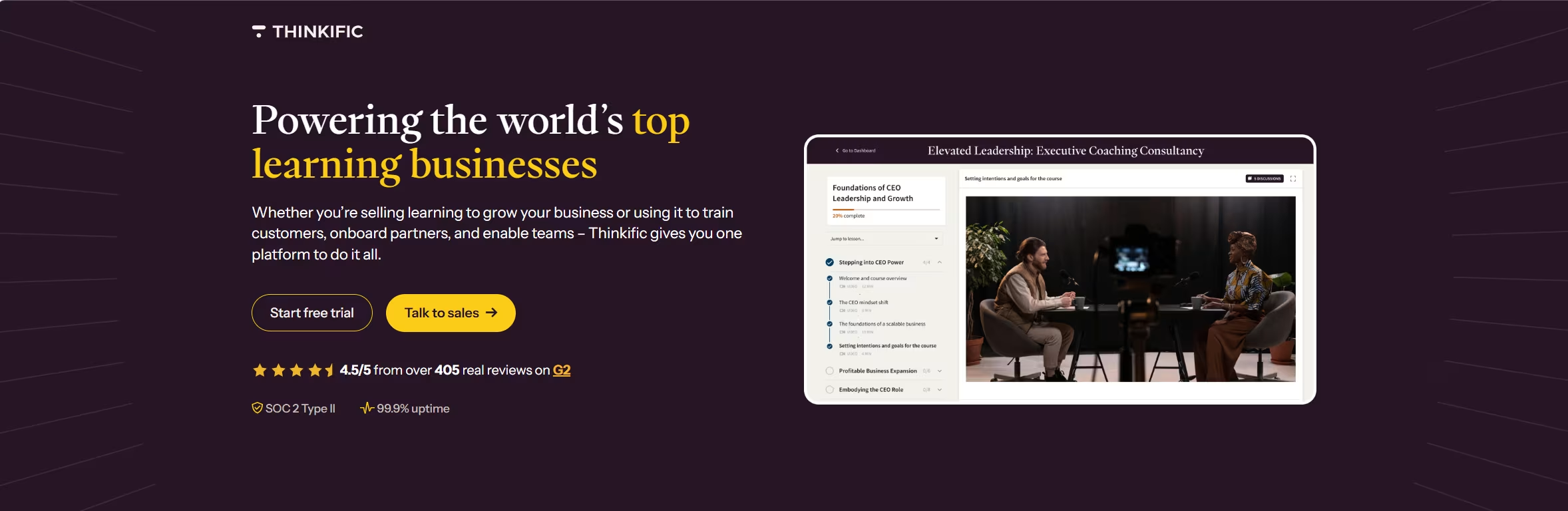
Thinkific holds a respectable 4.4 out of 5 on Capterra, from 206 reviews. That rating doesn’t point to a platform in crisis, just one that's better at some jobs than others.
The bottom line is that Thinkific is a course-selling tool. And after we look at the alternatives, there’s question to ask yourself, and that’s whether that's still the job you need done.
Thinkific alternatives at a glance
In short, Circle wins on community, Kajabi wins on built-in marketing, Podia wins on value, and Teachable wins on simplicity. The numbers, for platforms like Thinkific — the ones most often named as its direct competitors:
Platform | Best for | Starting price (checked August 2026) |
Thinkific | Straightforward course delivery | $40/mo billed annually |
Teachable | Mobile-first course selling | $29/mo billed annually |
Kajabi | Built-in marketing alongside courses | $143/mo billed annually |
Podia | Diversifying beyond courses | $42/mo |
Circle | Community-first learning | $89/mo |
Mighty Networks | Social-style community | $79/mo (or $950/yr) |
LearnWorlds | Interactive, assessment-heavy courses | $24/mo billed annually |
Udemy | Marketplace reach | Free to list; revenue-share model |
Thinkific alternatives — the fees
Platform | Transaction fees | Free plan available |
Thinkific | 2.9% processing fee, all tiers | No |
Teachable | 7.5% on Starter, 0% on Builder+ | No |
Kajabi | None | No |
Podia | 5% on Mover, 0% on Shaker+ | No |
Circle | None | No (14-day trial) |
Mighty Networks | None | No |
LearnWorlds | None | No |
Udemy | Revenue share (check current terms directly with Udemy) | Free to join |
Worth a quick mention. Skool, Systeme.io, LearnDash, and EzyCourse show up often in alternatives roundups too. Skool and Systeme.io lean community and marketing-funnel first, LearnDash is a WordPress plugin rather than a hosted platform, and EzyCourse is a newer, budget-focused entrant. None changed our picks below, but they're worth a look if the seven above don't fit.
The best Thinkific alternatives, reviewed
Teachable — best for straightforward course selling with mobile apps
Teachable's whole personality is "no surprises."
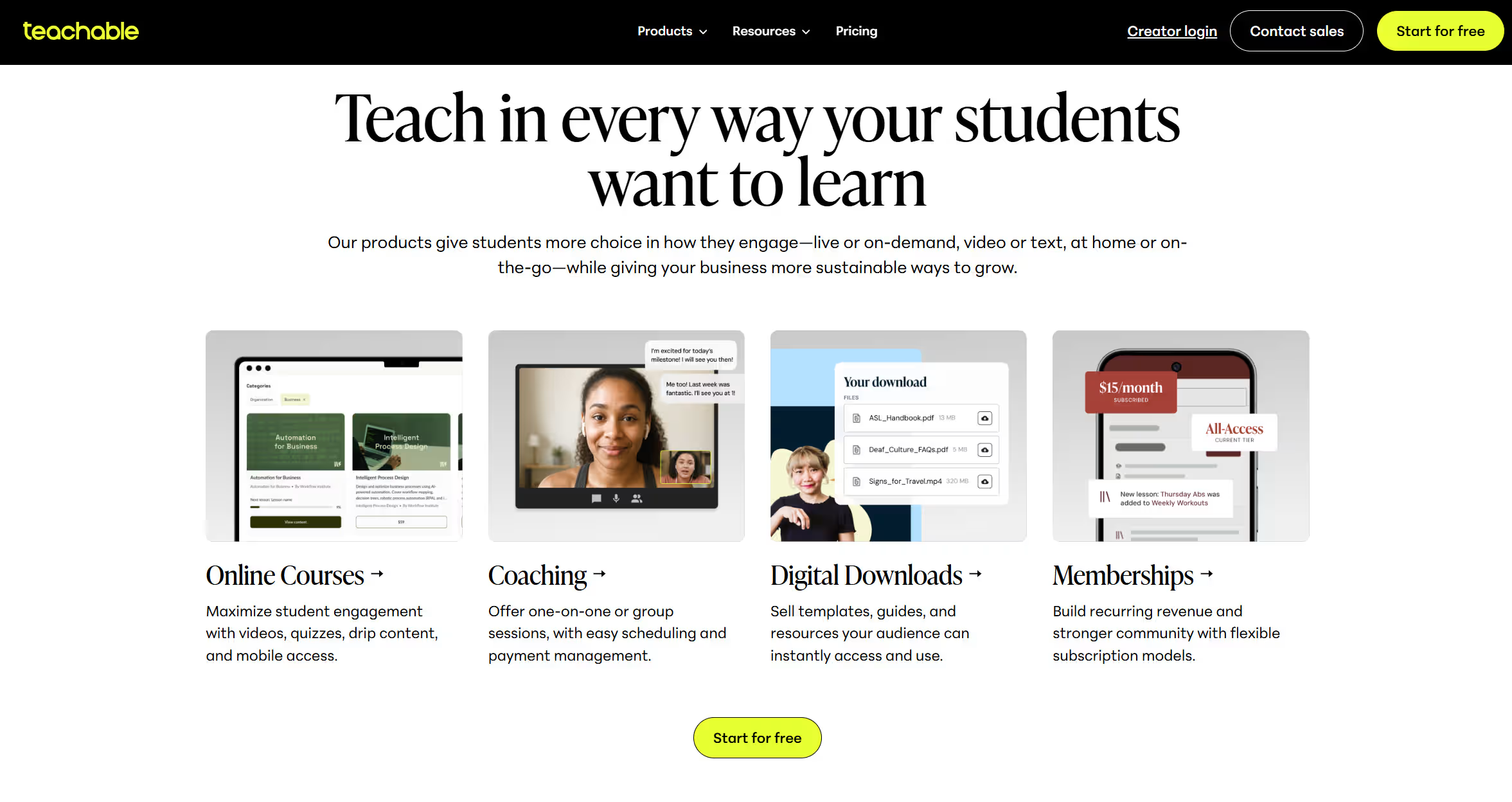
Build a course, price it, sell it. The mobile apps just work for students on iOS and Android, and checkout doesn't make anyone think twice. Pricing starts at $29 a month billed annually, with a 7.5% transaction fee on that entry tier. Upgrade to Builder ($89/mo) or Growth ($189/mo) and the fee disappears entirely — worth doing the math if you're selling any real volume.
The tradeoff is that Teachable doesn't try to be a marketing platform or a community hub — and there are no built-in funnels, no email sequences. What you get instead is a course you can sell without fighting your software.
Best for: creators who want the simplest possible path from "I have a course" to "someone bought it."
Kajabi — best for creators who want built-in marketing alongside courses
Kajabi is the friend who plans the whole trip herself — flights, hotels, itinerary — because delegating even one piece feels like losing control.
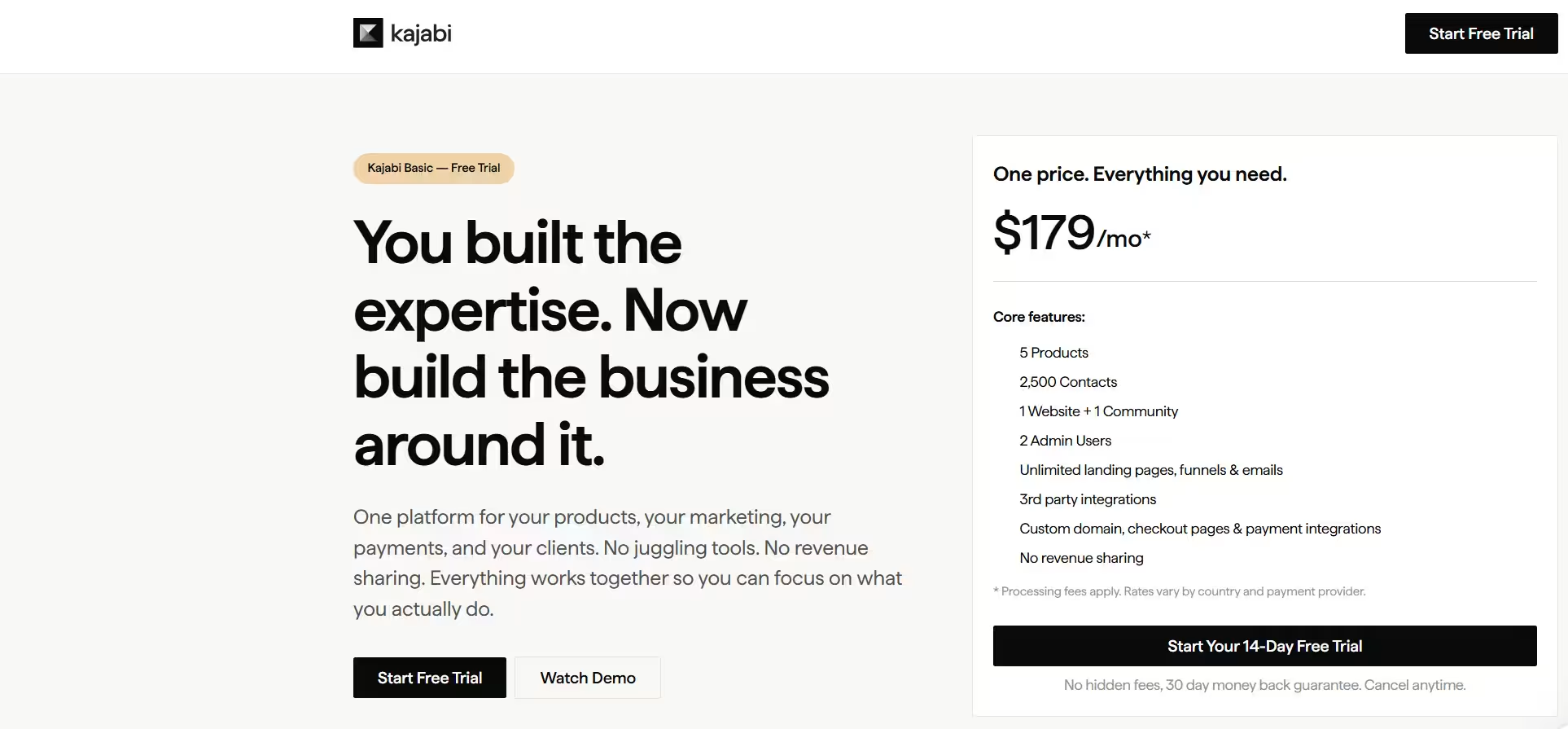
Every tier, starting at $143 a month billed annually, includes email marketing, landing pages, and sales funnels alongside course hosting.
That convenience has a price tag to match. Kajabi is the most expensive platform on this list by a wide margin, running up to $499 a month for its Pro tier. If you're already paying for Mailchimp, ClickFunnels, and a course host separately, Kajabi might be cheaper than it looks. If you're not, it's a lot of platform for a first course.
Best for: creators ready to run their marketing and their courses from the same login.
Podia — best for solopreneurs diversifying beyond courses
Podia is the Swiss Army knife of the group — a little bit of everything, nothing overbuilt.

Courses, community, digital downloads, and coaching are all included on every plan, starting at $42 a month with a 5% transaction fee on that entry tier — gone entirely on Shaker and above. No feature hides behind an upsell you didn't see coming.
It won't out-market Kajabi or out-community Circle. But if you're a one-person operation selling a mix of things — a course here, a coaching call there, a downloadable template on the side — Podia was built for exactly that mix.
Best for: solopreneurs who sell more than just courses and don't want five tools to do it.
Circle — best for creators who want community at the center
Circle is basically a clubhouse with a syllabus.
Discussions, live events, a member directory, and course content all live in one space, starting at $89 a month.
That focus is also the limit. Circle is a community platform that happens to host courses well, not a course platform with a chat feature added on. If your students mostly want to watch and finish, you're paying for engagement tools they won't touch. If they want to talk to each other between lessons, nothing else on this list does it as naturally.
Best for: creators whose courses work better as an ongoing conversation than a one-way lecture.
Mighty Networks — best for social-network-style learning communities
Mighty Networks is what you'd get if a social network and a course platform produced offspring.
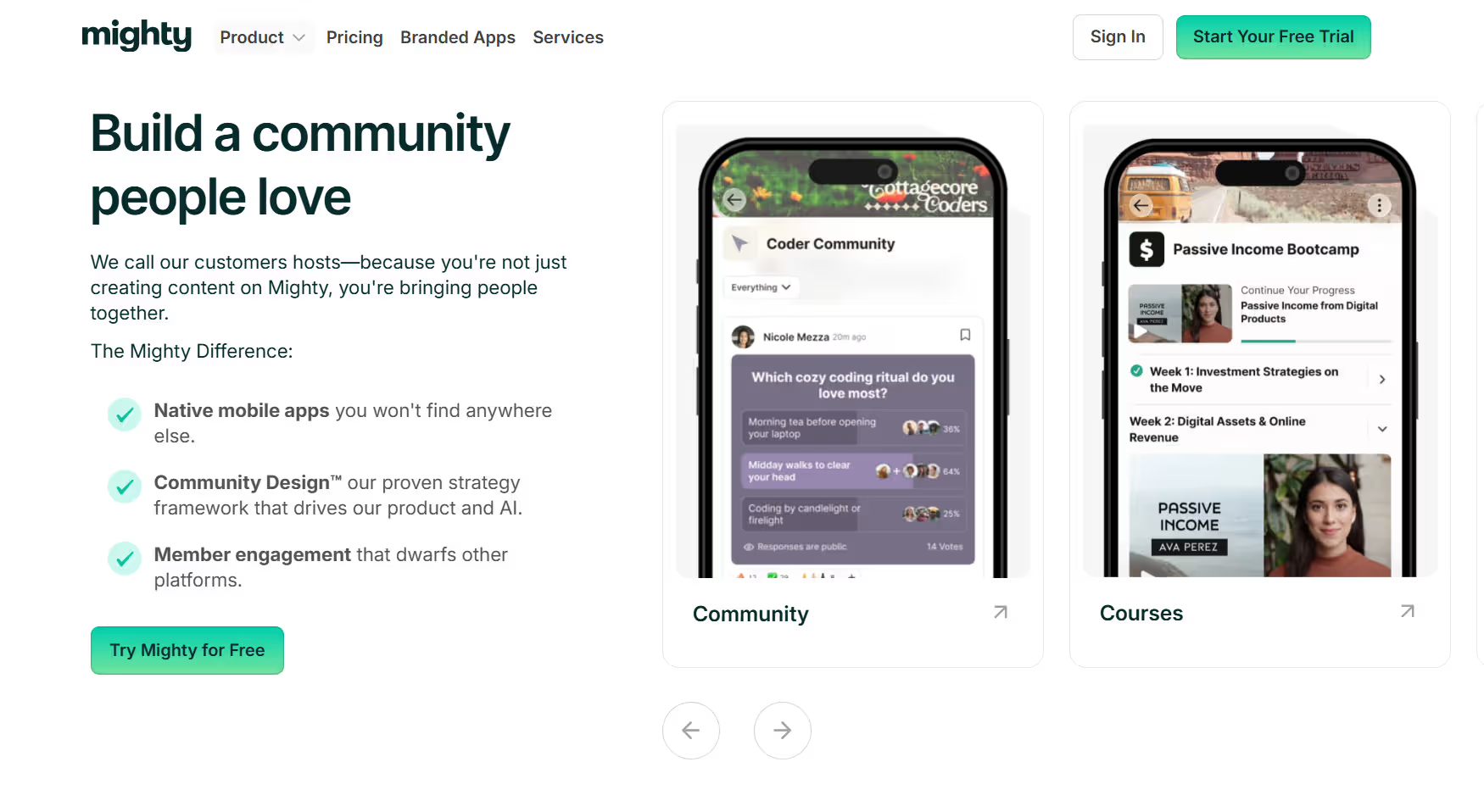
Courses live inside a broader social feed, alongside community discussions and events. Pricing starts at $79 a month.
The vendor itself now frames this less around learning and more around community-driven revenue. Its own pricing page highlights that Launch-plan communities earn $14,400 a year on average. Courses are part of that pitch, not the whole of it.
Best for: creators building a paid community first, with courses as one product inside it.
LearnWorlds — best for interactive, assessment-heavy course design
LearnWorlds is the strict teacher who checks your homework, not just your attendance.
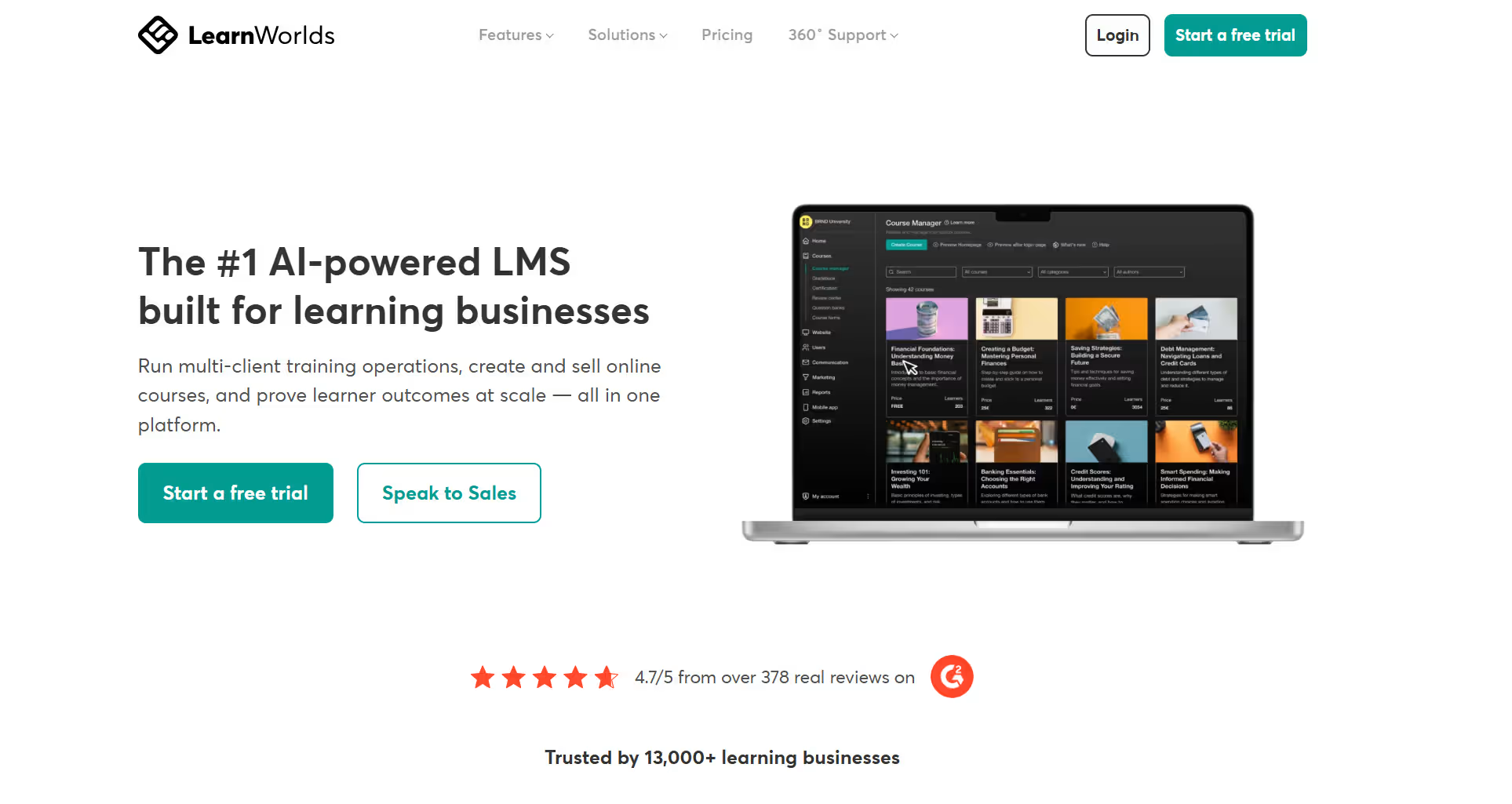
AI-assisted quizzes, interactive video, and multiple assessment formats show up even on its cheapest tier, $24 a month billed annually, scaling up to a $249-a-month Learning Center plan built for teams.
It's a deeper tool than most on this list, and that depth shows in the learning curve. Expect real time in the course builder before launch. For creators who care more about whether students learned something than how fast they can publish, that time is well spent.
Best for: educators who want to test comprehension, not just deliver video.
Udemy — best for marketplace reach over brand control
Udemy is the mall food court of course platforms — huge foot traffic, but you're sharing the space with everyone else's stand too.
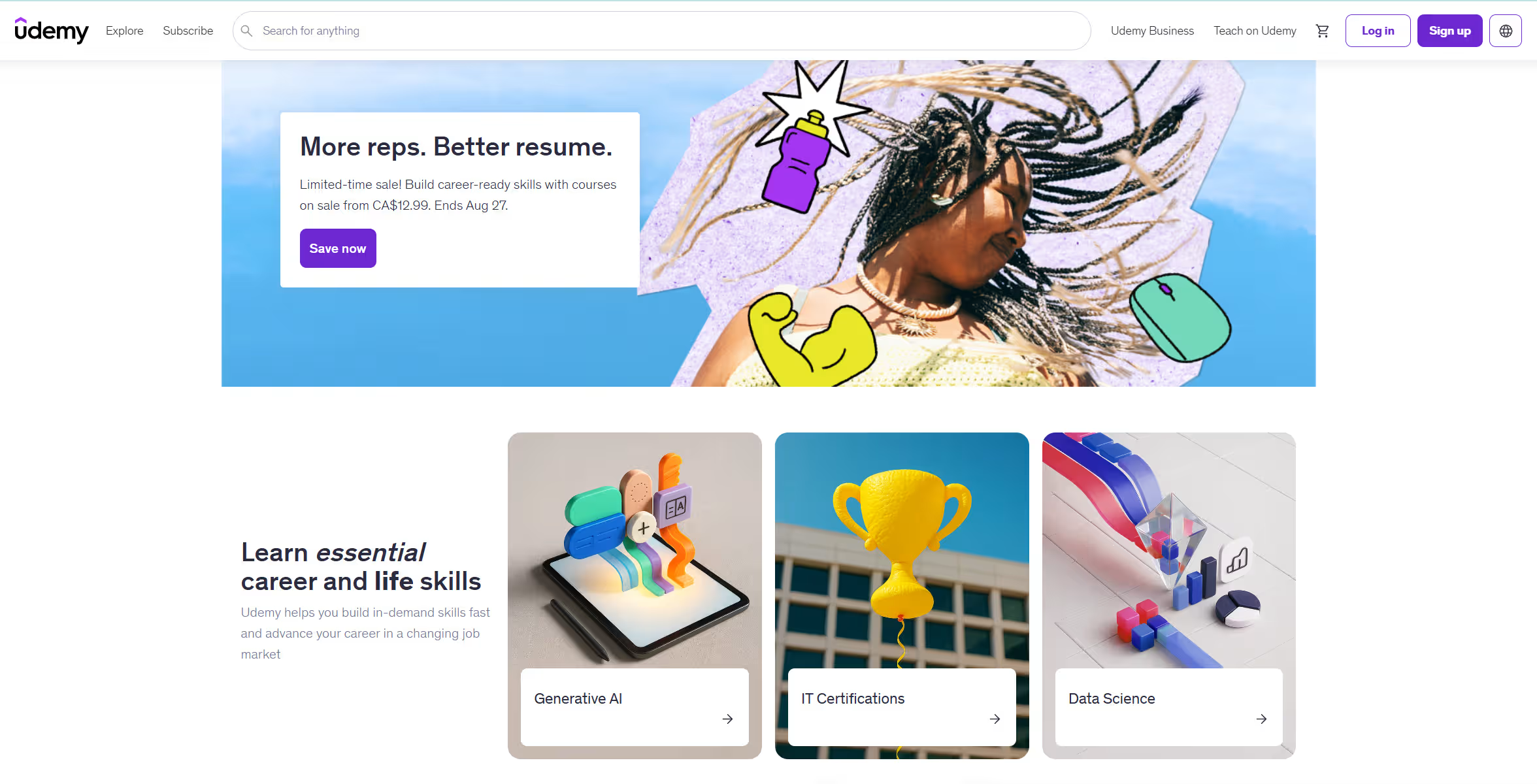
List a course, and it's discoverable by Udemy's existing base of learners — no landing page, no email list, no ad spend required to get your first student.
That access comes at a cost. Udemy runs on a revenue-share model, not a flat subscription, and courses live under Udemy's branding, not yours. Terms vary and change, so check Udemy's current instructor agreement directly before you commit.
Best for: creators who'd rather split revenue than spend months building an audience from zero.
When Thinkific and its alternatives aren't the right category
A course-selling platform — Thinkific or any of the seven above — isn't enough once you also need to train your own employees, track compliance, or connect training data to your HR systems. You can't fix that by comparing more course-selling platforms. It takes a different category of software.
Every platform above, including Thinkific, is built to do one job, and that’s to sell courses to people outside your company. Most people searching for Thinkific alternatives want that. But a growing number of companies start on Thinkific to sell training to customers, then discover they also need to onboard new hires, run annual compliance training, and prove to an auditor that both happened. None of the platforms above do that, because it isn't what they're for.
That's the job of a learning management system, or LMS — one platform that handles training for employees and outside audiences, like customers, partners, and resellers, together, with the tracking and reporting compliance work demands. It's what we build — Absorb LMS.
This isn't hypothetical. A majority of our clients use the platform for a blend of internal and external training, according to independent research from Forrester Consulting. In that same study, organizations using Absorb raised compliance completion from 85% to 95% — worth $3.7 million in avoided fines for the composite organization studied — while cutting employee onboarding time by 40% and generating $1.1 million in profit from course sales run through the same platform. We also connect directly to the HR systems companies already run, including a built-in ADP integration.
"When you're making the business case for customer education, don't sell it as education. Sell it as an efficiency driver and a revenue protection layer. If customers don't adopt, nothing else matters — and product alone doesn't solve for scale, complexity, or change management. Customer education fills that gap." —Darren O'Connor, Absorb's Director of Customer Success
If that's closer to your situation than "which course platform should I pick," you were probably comparing the wrong category of software.
Need more than a course-selling platform? See what Absorb can do for you.
How to choose the right platform for what you need
There's no single "best Thinkific alternative," only the one that fits what you're building.
- Selling one course, want zero friction: Teachable.
- Running courses, coaching, and downloads as one small business: Podia.
- Want your marketing and courses in one system: Kajabi.
- Building a paid community where courses are one part of it: Circle or Mighty Networks.
- Care most about proving students actually learned something: LearnWorlds.
- Want an audience you didn't have to build yourself: Udemy.
- Also need to train your own employees, track compliance, or connect to HR systems: that's not a course-selling platform's job — see the section above.
Frequently asked questions
Is there a free alternative to Thinkific?
Yes. Udemy is free to list a course on, since it earns through revenue share instead of a subscription. Among subscription platforms, none on this list has a permanent free tier, though most offer a trial period.
What's the cheapest Thinkific alternative?
LearnWorlds and Teachable both start under $30 a month billed annually — the lowest entry price among the platforms reviewed here. Watch the transaction fees, though. Teachable's cheapest tier still takes 7.5% per sale.
Can I migrate my courses from Thinkific to a new platform?
Yes, generally. Most platforms in this article, including Circle and Teachable, support exporting your content and offer migration help. Expect to spend a few weeks rebuilding rather than a one-click switch.
What are the main disadvantages of Thinkific?
Cost that climbs with your plan tier, a flat 2.9% processing fee on every sale, and no built-in community features. See "Why people look for a Thinkific alternative" above for the full picture.
Does Thinkific support SCORM or compliance-tracking needs?
Only on its enterprise-level Plus plan. Thinkific's own documentation confirms SCORM 1.2 and 2004 4th Edition support there — standard Thinkific plans don't include it.
Is Thinkific good for training my own employees, not just selling courses?
Not really, and neither are its direct alternatives — they're built for external course sales, not internal training, compliance tracking, or HR system integration. See "When Thinkific and its alternatives aren't the right category" above.
The bottom line
Thinkific is a capable course-selling tool, and most of the platforms above are too. Pick based on the job you need done, not the "our verdict" section of a page written by the product it's grading. Teachable for simplicity, Kajabi for built-in marketing, Podia for a small mixed business, Circle or Mighty Networks for community, LearnWorlds for rigor, Udemy for reach.
But if your training need has outgrown "sell courses to customers" and now includes your own employees, your compliance obligations, and your HR systems, none of the platforms in this roundup, Thinkific included, are built for that job. An LMS is. See what Absorb can do for you.
.avif)


