


.jpg)

LMS for leadership development: management and leadership skills training essentials
An effective LMS for leadership development fixes one specific, common, and impactful problem. New managers get the title and the team, but they have startlingly little practice at the skills the job requires. From the C-suite down to first-time supervisors, that shows up in how people are led. And how people are led influences how they feel and perform.
More than three-quarters of chief human resources officers say they lack confidence in their bench strength for critical roles, according to Development Dimensions International's 2025 Global Leadership Forecast — the lowest confidence in years.
So if you're the HR or L&D professional building or evaluating a management-training program, there are some important themes:
- The specific management and leadership skills worth training for, and which ones separate a good manager from a bad one
- How training needs shift by generation, from Millennial managers to Gen Z to mid-level leaders
- How the right LMS delivers that training at scale, instead of a once-a-year checkbox course
Are we facing a leadership crisis?
Yes — and not because managers got worse. The issue is that the job moved faster than the training did. There are new tools, new ways to work (remote and hybrid teams), and expectations that shift every quarter. Most leadership programs still run on a once-a-year schedule.
Millennials and Gen Z are moving into management roles now, and many feel out of their depth. That's not a generational dig — 36% of managers overall say they weren't sufficiently prepared for the people-management side of their role.
Miss the training in communication, empathy, strategic thinking, or just helping a team adjust to a new process, and it surfaces as low morale, high turnover, and stalled growth.
What are the essential management and leadership skills?
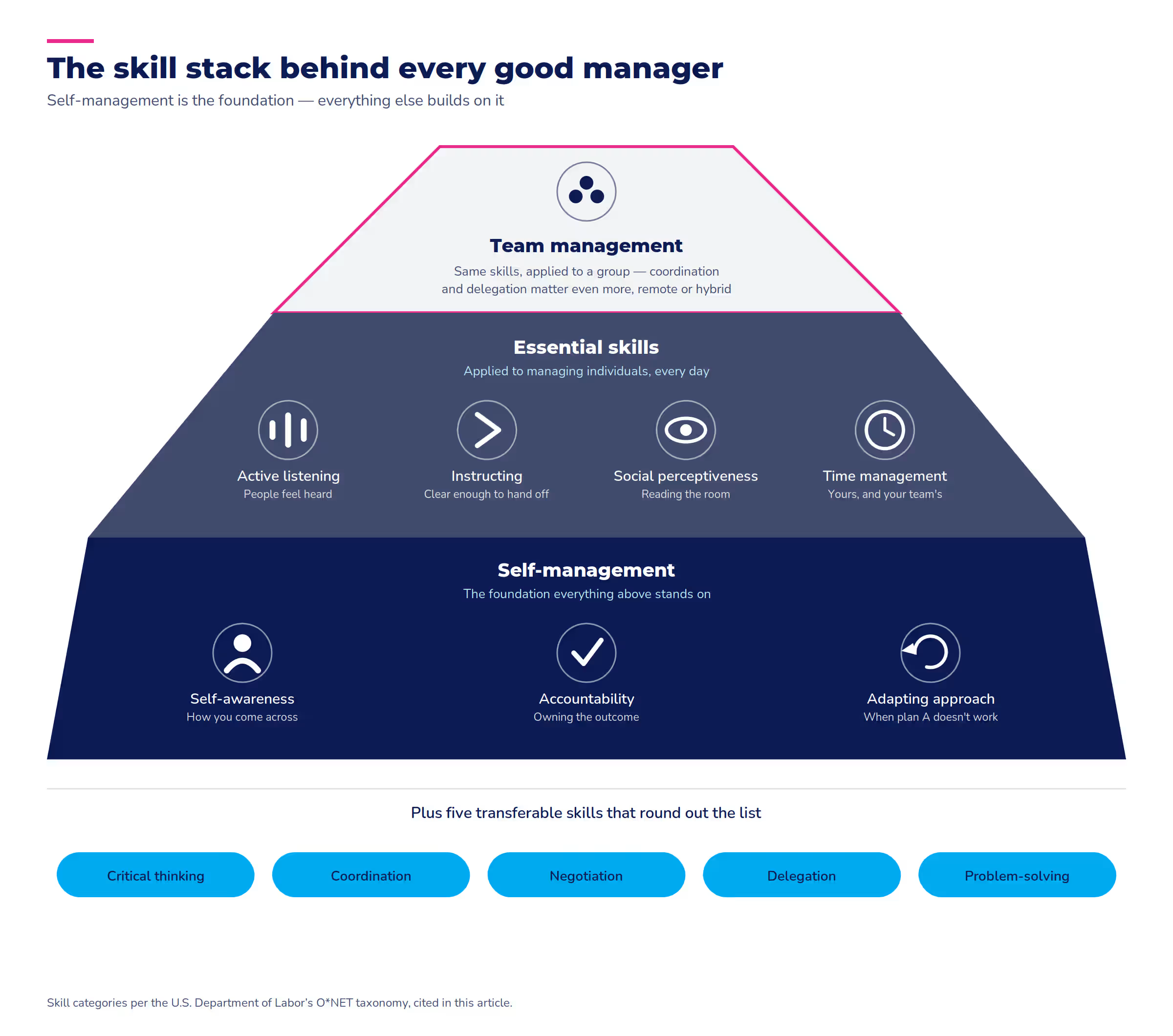
Management skills fall into two groups: skills essential to the role itself, and skills that transfer in from other jobs. That split comes from the U.S. Department of Labor's O*NET database, a neutral, government-maintained skills taxonomy.
Essential skills are the ones every manager uses daily. Transferable skills hold the essentials up — without them, the essentials don't survive changes like a new team, new tools, a new role.
|
|---|
Put those skills to work and you get the day-to-day habits of a good manager of giving direct feedback, running a meeting that ends with clear next steps, and adjusting the plan when something changes.
Team management applies the same skills to a group instead of one person. Coordination and delegation matter even more when a team is remote or hybrid, since you can't rely on hallway conversations to catch problems early.
Before you can lead a team, you need to manage yourself. That means staying aware of how you're coming across, holding yourself accountable, and adjusting when your first approach doesn't work. Self-management is the foundation the rest of this list stands on.
Stellar management training builds these skills, and an LMS can deliver training effectively, without turning it into a once-a-year checkbox course.
What's the difference between leadership and management skills?
Leadership and management aren't the same job, even though the same person often does both. Leadership is about strategic vision. Leaders set the direction and get a team to want to pursue it. Management is more tactical, organizing people and processes to hit a specific goal.
A manager is a formal title. Leadership isn't. Someone can hold a management title without leading anyone, and someone with no title at all can lead through the way they show up for their team. The two overlap when a manager builds the skills that make people want to follow them: emotional intelligence, self-awareness, and the ability to influence without just issuing orders. A title gets you the org chart box, but not followers or champions.
Training effective leaders is vital for employee satisfaction and retention
Training your managers well keeps people longer. The old saying that people don't leave jobs, they leave managers holds up. Poor leadership drains morale, engagement, and productivity.
Manager skills directly affect engagement and performance. Gallup's 2025 research found that equipping managers with the right skills, backed by a culture that supports them, improves both. It's critical because disengaged employees are already halfway out the door. Gallup found most of them are still job-searching or watching for openings elsewhere.
Managers trained to build trust, communicate clearly, and recognize good work create purpose-driven workplaces where people want to stay. When a manager shows real empathy and creates a safe environment for their team, people feel understood — and that's motivating and good for business.
The importance of building a strong leadership pipeline
A strong leadership pipeline means training every manager consistently, whether they're brand new to the role or 10 years in, so your company's values and standards spread across every department instead of leadership style being left to chance.
Tactical training covers the daily work of giving feedback, running meetings, delegating, and managing performance. Skills training like this is also your best tool against turnover, since managers who build a supportive culture keep their teams longer.
The catch is that a supportive culture doesn't look the same for every generation. The approach shifts across the career stages you're likely training right now — but before the how-to, here's the honest scorecard.
Generation | Management superpower | Management kryptonite |
|---|---|---|
Millennial managers | Wants your feedback, and uses it | Might over-mentor before letting someone struggle a little on their own |
Gen Z managers | Leads with purpose instead of fear or hierarchy | More than half would rather skip the promotion than take on the stress |
Every generation, honestly | Wants a manager who actually listens | Nobody lists "listening" on a resume until it's already a problem |
How to develop Millennial leaders
Millennial managers are new to the role and want to know what success looks like. Mentorship works well here, especially hands-on formats like shadowing a senior leader's meetings, since Millennials tend to seek continuous feedback.
Face-to-face skills matter too: active listening, asking good questions, and handling a tough conversation without an email thread to fall back on. Stretch assignments — tasks slightly outside their comfort zone — build the confidence and strategic thinking that come from doing, not just training.
How to develop Gen Z leaders
Gen Z often starts from skepticism about management itself. More than half of Gen Z professionals don't want a middle-management role, according to a 2024 Robert Walters survey of 2,000 UK professionals. Most cite stress and low reward as the reason — fair enough, if the promotion just means more stress for the same paycheck.
Flexible, modular training helps here, but not as a replacement for people. Research on how Gen Z learns points to a balance, not pure independence: self-paced formats work best when they're paired with real mentorship and human interaction, not left to run entirely on their own. Tying training to work Gen Z already finds meaningful helps them see management as worth the stress, not just a source of it.
How to develop emerging talent
Spotting future leaders early, then giving them structured but flexible development, builds your pipeline before you need it. Mentor pairings give emerging talent a trusted resource for questions they wouldn't ask through official channels.
Cross-functional projects build collaboration skills that a single department can't teach on its own. Regular feedback from senior leaders, plus access to company-wide meetings and networking events, rounds out the picture with connections that shape where someone's career goes next.
How to develop mid-level managers into leaders
Mid-level managers are ready to be pushed. Rotational assignments across departments build the cross-functional knowledge a narrower role doesn't offer. Real strategic projects, the kind with actual risk attached, build the resilience and creative thinking that low-stakes training can't.
Peer-learning groups matter at this level too. A structured space to trade notes with other managers facing the same problems does more for continuous growth than another solo course.
Career stage | What they need most | How Absorb LMS can help |
|---|---|---|
Millennial managers | Mentorship and continuous feedback | Course libraries paired with manager check-ins |
Gen Z managers | Flexible, self-paced training with real mentorship | Modular courses learners can pace themselves through |
Emerging talent | Mentor pairings and cross-functional exposure | Assignable learning paths tied to a mentor's sign-off |
Mid-level managers | Rotational, strategic stretch assignments | Custom courses built around real project work |
Delivering management and leadership skills training via your LMS
Knowing which skills to build is only half the job. The other half is delivery, and that's where the right LMS for leadership development earns its place — but only with the right content and tools behind it. Here's what to look for.
1. Course libraries. Absorb LMS ships with ready-made content covering leadership fundamentals, conflict resolution, and strategic planning, so you're not building every course from scratch.
2. In-the-moment support. The Aura Learner Agent answers questions in natural language and delivers micro-learning and on-the-spot clarifications while managers move through training. That's useful for keeping managers engaged through a longer leadership program instead of losing them halfway through.
3. Course authoring. Aura Create lets you build a new course up to 10 times faster. Upload existing documents or paste a prompt, and Aura generates a course outline and content you can refine before publishing. That matters for management training specifically, since the skills your managers need this year can shift faster than a once-a-year course refresh.
4. Interactive and accessible learning. Quizzes and role-play exercises get people practicing a skill like a feedback conversation, not just reading about one. Built-in accessibility features make sure the training works no matter how someone learns best.
If you're comparing an LMS to a learning experience platform (LXP), the difference matters here. An LMS is built around structured courses, completion tracking, and reporting you can hand to leadership. An LXP leans more toward recommending content from multiple sources based on what a learner seems to want next. Management-skills programs usually need the LMS side first: structured courses your team can complete and you can measure, with AI features layered on top of that structure rather than swapped in for it.
Common questions about LMS for leadership development
What are the 5 basic management skills?
Lists vary, but the most commonly cited core skills are communication, delegation, decision-making, conflict resolution, and time management. See the full essential-and-transferable skills breakdown above for the complete picture, including how these fit together.
What is an example of a learning management system?
Absorb LMS is one example: a platform that hosts courses, tracks who's completed what, and reports on progress. Most LMS platforms share that core job, then differentiate on things like AI-assisted authoring, accessibility features, or how well they personalize the learning path.
What is the best way to learn management skills?
A mix works best: structured courses for the concepts, mentorship for the judgment calls a course can't teach, and stretch assignments for practice. No single format covers all three.
What are common weaknesses that hold managers back, and can training fix them?
Delegating instead of doing everything yourself, giving direct feedback instead of avoiding it, and managing conflict instead of letting it fester are the ones that show up most often. Training helps because these are learnable skills, not fixed personality traits. Practice and feedback move the needle.
Build a strong pipeline of future leaders to drive your business forward
Investing in your people's development builds a steady pipeline of capable leaders instead of leaving it to chance. Absorb LMS gives you the course libraries, authoring tools, and tracking to deliver that training at scale, so every manager, new or experienced, gets development that's relevant to their role and consistent with your company's standards.
Pick one skill gap from the list above, match it to the career stage feeling it most, and build your first course around that pairing before trying to solve everything at once.


.avif)
.avif)