


.jpg)


Employee onboarding for hospitality, built for shift work and turnover
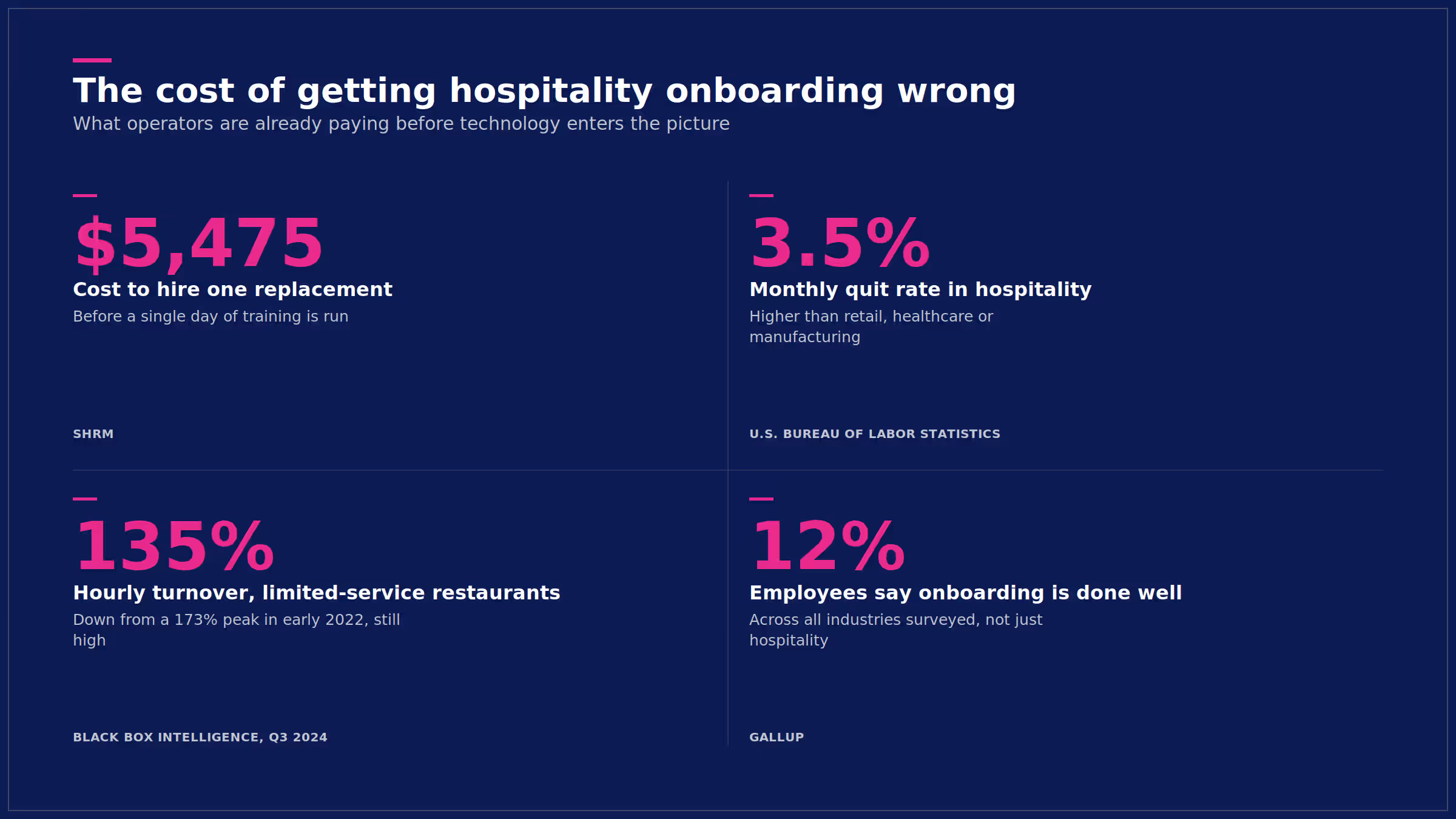
Employee onboarding in hospitality has a spending problem and a trust problem. SHRM’s benchmarking data says it costs $5,475 on average just to recruit and hire one hospitality replacement, and Gallup found that just 12% of employees think their company onboards well. If you run HR, L&D, or operations for a hotel, restaurant, or multi-property group, you've probably come up against these numbers.
And you may have used the tried and true solutions of pre-boarding, structured orientation, a buddy on day one, and role-specific training. But without proper infrastructure, scale breaks these.
Hospitality teams work shifts, rotate across locations, and often speak more than one language on the floor. Onboarding built for a single office can't keep up.
Maybe that's a single boutique hotel still training new hires by having them shadow a manager for a shift and hoping things stick. Maybe it's a restaurant group opening a new location every quarter, or a multi-property team that only finds out training went sideways after a guest complains. If any of these sound like your week, keep reading.
Problems with scaling hospitality training can be fixed with a checklist built to survive that scale, along with new AI capabilities. The goal is consistency and ongoing support — a program that runs the same way on every shift and every site.
What bad onboarding costs hospitality businesses
Hospitality already has the highest quit rate of any industry the government tracks. The Bureau of Labor Statistics puts the hospitality industry at a 3.5% monthly quit rate, higher than retail, healthcare, or manufacturing. Bad onboarding is one piece of that turnover number, and it lands in the one window you control, a new hire's first few weeks.
The dollar cost is concrete, though the exact figure depends on what you count. SHRM's data puts the average cost just to recruit and hire a nonexecutive replacement at $5,475, before a single day of training. And that cost repeats often. Limited-service restaurants ran an hourly turnover rate of 135% in the third quarter of 2024, according to Black Box Intelligence — down from a peak of 173% in early 2022, but still high enough that many locations replace their entire hourly staff, and then some, within a single year. (Expensive!)
A hotel housekeeper earns a median $17.07 an hour nationally, a server $16.94, and a fast-food or counter worker $15.00. Housekeepers, servers, and counter staff are the roles hospitality depends on most, and the ones who feel a bad onboarding process first. In hospitality, a guest's entire impression comes from whoever is standing at the front desk or table that day. An undertrained new hire is a guest-experience risk with a dollar value attached to it.
Hospitality operators already know what good onboarding looks like. The tactics below show up in nearly every hospitality onboarding guide. The big challenge is running them consistently across a workforce that doesn't sit still is what's hard.
What a hospitality onboarding checklist covers
A hospitality onboarding checklist needs four things to work. Those are pre-boarding before day one, a structured first-week orientation, a buddy or mentor, and role-specific compliance training. Most operators do some version of each — Absorb's employee onboarding checklist walks through the general version step by step. The table below breaks down what each tactic solves and what it takes to keep it running everywhere.
Onboarding tactic | What it solves | What technology needs to do |
Pre-boarding | New hires show up informed, not blindsided | Send schedules, paperwork, and welcome content automatically, before day one |
Structured orientation | Inconsistent first impressions across shifts and locations | Deliver the same content everywhere, on any device |
Buddy or mentor system | Isolation and slow ramp-up in a new role | Track who's paired with whom and flag pairings that need a check-in |
Role-specific compliance training | Legal exposure and safety risk | Assign the right certification by role and track expiration dates |
Give new hires a head start before day one
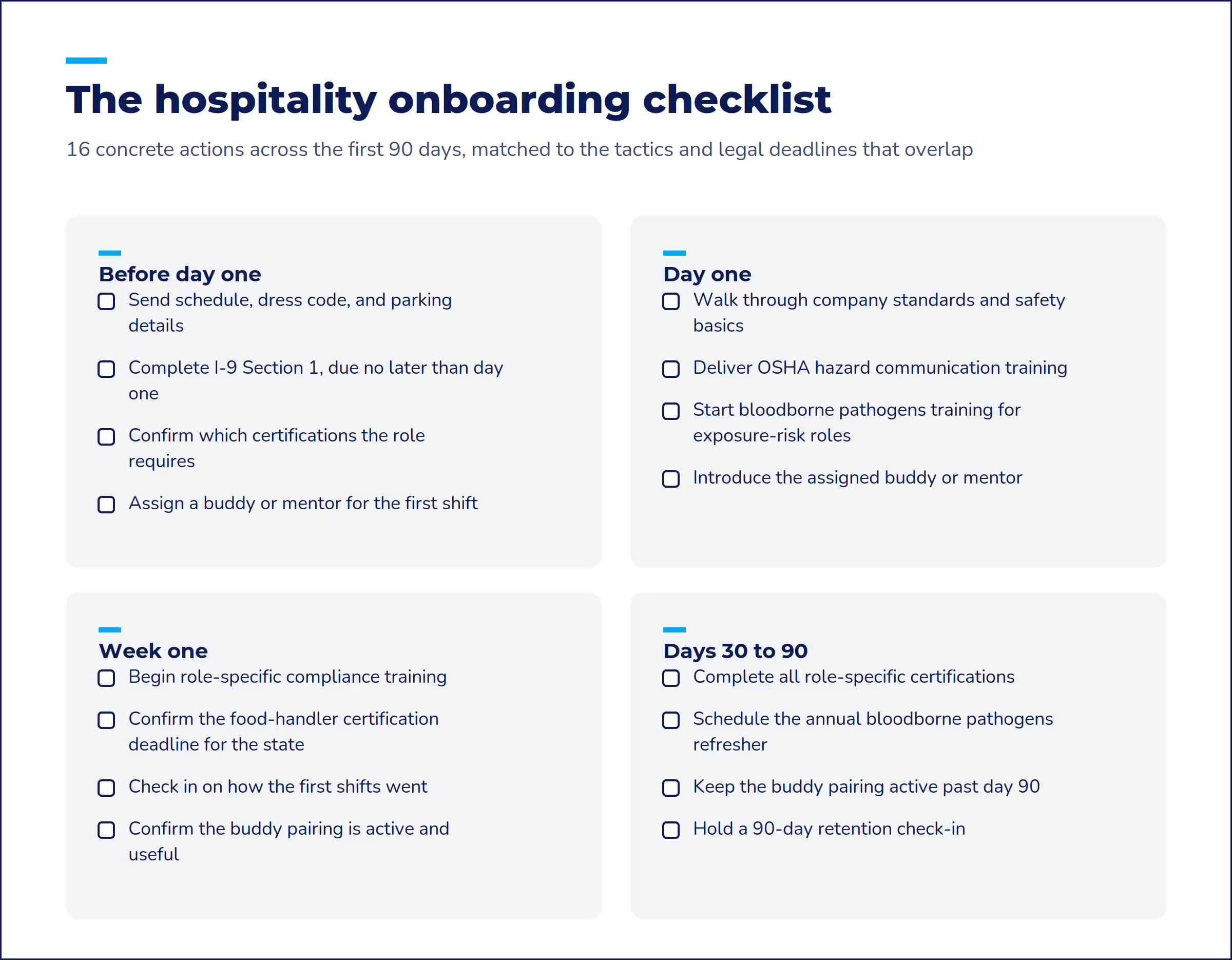
Pre-boarding means giving a new hire real, useful information before their first shift, not on it, like their schedule, dress code, parking, and what to expect. A housekeeping hire and a front-desk hire need different things before day one.
Make the first week feel the same everywhere
Orientation should cover company standards, safety basics, and role expectations in the first week, the same way, no matter which location or shift a new hire lands on. A front desk agent in one city and a server in another shouldn't get a meaningfully different version of "how we treat guests here."
Pair every new hire with someone who's done the job
Pairing a new hire with an experienced coworker for the first few weeks shortens ramp time and cuts the isolation that drives early quits. It counts for even more on multilingual, deskless teams, where a buddy can answer, in the moment, what a manual or a video often doesn't cover.
What each role needs, and when it's due
New hospitality hires usually need role-specific training plus several compliance requirements on a real clock. OSHA requires hazard communication training at the time of initial assignment, and bloodborne pathogens training for roles with exposure risk at the time of initial assignment, with annual refreshers after that. I-9 verification is due no later than an employee's first day for Section 1. Many food-service roles require food-handler certification, like ServSafe, though exact timing varies by state.
Why these tactics break down at scale — and how AI technology fixes it
Hospitality's workforce is what breaks these tactics at scale. It's frontline, mobile-first, spread across locations, and often multilingual, nothing like the office-based workforce most onboarding advice assumes.

Frontline staff aren't sitting at a desktop between shifts. They're checking a phone at the host stand, in the stockroom, on a housekeeping cart — the kind of frontline workforce training has to reach differently. About 91% of U.S. adults own a smartphone, hospitality's frontline staff included, which makes a mobile-first training experience worth more than a printed handbook or a desktop-only portal nobody at the front desk has time to sit down for.
Most onboarding checklists assume every new hire reads the language they're written in. Hospitality doesn't work that way. Onboarding content written and delivered in English fails many people in the roles that hospitality depends on most.
Scale is where these solutions break down: a single hotel's onboarding process looks nothing like a 900-location chain's. One property can get by on a good checklist and a manager who cares; a large multi-property operator can't rely on that. Someone needs to know every location delivered the same training, to the same standard, without checking in person.
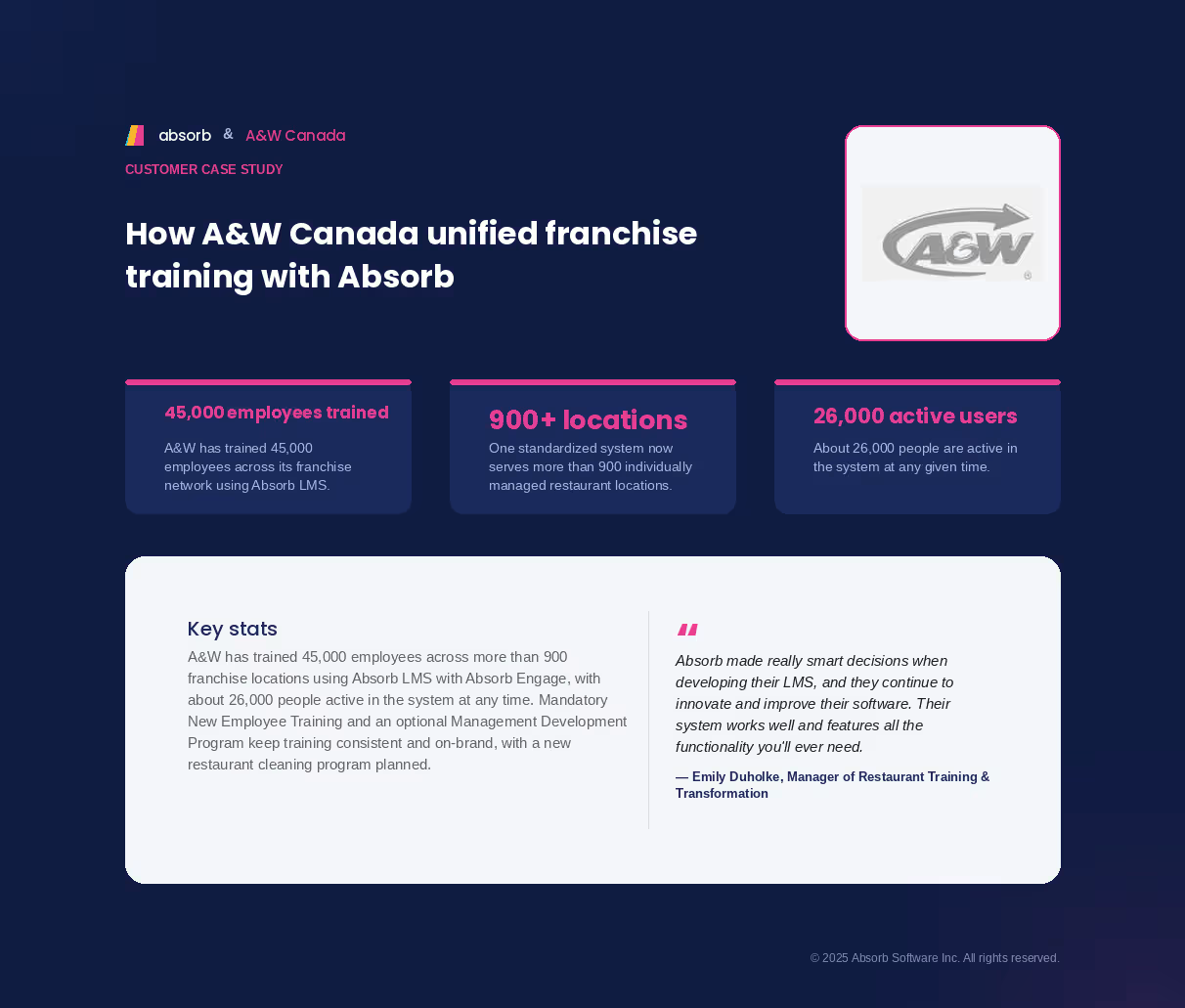
A new dishwasher's first shift at a 900-location restaurant chain looks nothing like a corporate new-hire orientation, and that's the kind of mismatch A&W Canada ran into. With more than 900 franchise locations and thousands of individual admins managing training on their own, Absorb helped A&W standardize training across 900 locations, reaching 45,000 employees with the same New Employee Training program regardless of which restaurant they walked into.
"We have a decentralized system due to our franchise structure. So we have thousands of users, but we also have thousands of admins, each managing their own small department. Familiarity with our LMS varied significantly from one admin to the next, which often made learning more difficult." — Emily Duholke, Manager of Restaurant Training & Transformation, A&W Canada
Seasonality can complicate things, too. A resort staffing up for summer or the holidays has weeks, not months, to build new training from scratch. The checklist from the section above needs a system underneath it, one that works on a phone, tracks completion and certification across every location, and doesn't assume everyone reads the same language.
Where AI is changing hospitality onboarding next
The next shift in hospitality onboarding is AI that meets frontline workers in the moment they need help, answering a question mid-shift instead of waiting for the next scheduled course.
A new hire on a solo shift doesn't always have a manager free to ask a question. An AI agent that can answer that question instantly, from their phone, without pulling a manager off the floor. Absorb LMS includes this as the Aura Q&A agent, built to answer in-the-moment questions.
Certification deadlines are easy to miss across a distributed, multilingual workforce, especially when reminders only go out one way, in one language. An AI agent that nudges each employee about an expiring certification catches what a manager checking a spreadsheet usually misses. Absorb's Aura Learner Agent does this kind of nudging automatically.
Excellent content creation tools help with the seasonal crunch. AI tools that help a small team turn existing material into a new course quickly, like Aura Create, mean training keeps pace with hiring.
And while AI handles the checking, nudging, and answering, humans are very much required. A real person still decides what good onboarding looks like and steps in when there’s a judgement call.
AI adoption is still early across hospitality. Most onboarding today runs on courses and checklists. But the direction is clear enough to belong on any tech shortlist.
Choosing training technology that do hospitality onboarding +
The right hospitality training tech checks five boxes — and it pertains to onboarding and behond. It works on a phone first, tracks certifications automatically, runs consistently across every property, connects to the systems you already use, and helps a small team build training fast.
- Mobile-first delivery, training that works on the device a shift worker carries, not one they need a desk and a login break to access. Absorb LMS includes a dedicated mobile app built for this.
- Compliance and certification tracking, automatic tracking of expiration dates for things like food-handler and safety certifications (instead of a spreadsheet someone doesn’t have the time to update).
- Multi-property consistency, the same training, delivered the same way, whether it's one hotel or two hundred. Absorb's multi-tenant structure handles this, delivering role- and location-specific training without duplicating content for every site.
- Integration with what you already run, like your property management system, point-of-sale, and HR system, so onboarding data doesn't sit in its own silo.
- Fast content creation, microlearning formats and AI-assisted course-building, like Absorb Create, for when a new hire cohort needs training this week, not next quarter.
That list covers the mechanics. But usability is often as — or more — important. When you're looking to find the right LMS for hospitality employee onboarding, make sure ease of use is on your list of "must haves."
"New hires consistently tell us the LMS was clean, straightforward, and easy to navigate, and that matters enormously when you're trying to keep someone engaged and learning in their first few days," says Troy Powell, Director, Human Resources at Absorb. "A confusing or frustrating platform creates friction at exactly the wrong moment."
Whether you call it an LMS for hospitality or just hospitality training software, weigh your options against this list first, then compare specific tools.
Frequently asked questions
Why does structured onboarding matter in hospitality?
Structured onboarding gets new hires productive faster and cuts the early turnover that costs hospitality operators $5,475 per hire on average just to recruit and rehire, before counting training time. Without it, new hires learn inconsistently from whoever happens to train them that shift.
What are the biggest mistakes companies make onboarding hospitality staff?
The most common mistakes are treating onboarding as a single day instead of the first few weeks, skipping pre-boarding entirely, and running the same generic process for every role and location. All three slow down ramp-up and make early turnover more likely.
What should hospitality onboarding include?
At minimum, hospitality onboarding needs pre-boarding before day one, a structured first-week orientation, a buddy or mentor, and role-specific compliance training. See the checklist earlier in this guide for what each one solves.
What safety and compliance topics should hospitality onboarding cover?
New hires typically need hazard communication training and, where relevant, bloodborne pathogens training under OSHA rules, I-9 verification, and food-handler certification for food-service roles. Timing requirements vary by state and role, so check local rules before setting a single company-wide deadline.
How long does hospitality onboarding typically take?
Most programs run from a few days of structured orientation to a full 90-day ramp period, with check-ins along the way. Pre-boarding and the first week should move fast; ongoing development, like 30/60/90-day check-ins, extends further.
How far in advance should pre-boarding start before a hospitality employee's first day?
As soon as an offer is accepted. Even a week of pre-boarding, covering schedule, dress code, and what to expect on day one, reduces the anxiety that makes a new hire more likely to no-show or quit early.
How often should an onboarding checklist be updated?
Review it at least once a year, and any time a role, location, or compliance requirement changes. A checklist that hasn't changed in years is usually missing something new hires are running into.
What KPIs show whether hospitality onboarding is actually working?
Time to productivity, 90-day retention, and completion rates for required certifications are the three worth tracking. Completion alone doesn't tell you much. Pair it with whether new hires are still there and performing at 90 days.
What do hospitality companies with low turnover do differently during onboarding?
They combine the tactics above (pre-boarding, structured orientation, mentorship, compliance tracking) with technology that keeps them consistent across every shift and location, instead of relying on whichever manager happens to be working that day.
The bottom line for hospitality onboarding
Good hospitality onboarding is four focused tactics that aren’t new to most operators. Pre-boarding, structured orientation, a buddy system, and compliance tracking hold everything together. But to get these things right, the checklist must survives contact with a shift-based, multi-location, multilingual workforce.
That means people and technology must work together to deliver training that works on a phone, tracks certification deadlines automatically, and stays consistent whether you run one property or two hundred. AI agents that answer questions in the moment and help a small team build training fast add to that foundation.
We build Absorb LMS around this list, with a mobile app for frontline delivery, a multi-tenant structure for consistency across properties, and Absorb Aura's agents standing in for the answers a manager isn't always around to give.
.avif)

.avif)
