

The use of videos in everyday life has increased thanks to the use of smartphones and tablets. Interactive video technology distinguishes itself from regular video by providing a more active experience. Learners interact by clicking or touching hotspots and by receiving additional information or feedback about their knowledge. In essence, we allow learners to react to what they are seeing and to be more than just observers.
Nowadays, we can easily produce interactive videos that offer two-way communication between the learner and the content. Existing video content hosted internally or hosted on online video platforms like Brightcove, YouTube and Vimeo are easily transformed from passive to interactive videos.
Start driving more engagement to your learning videos by layering different types of interactive objects such as the ones outlined below.
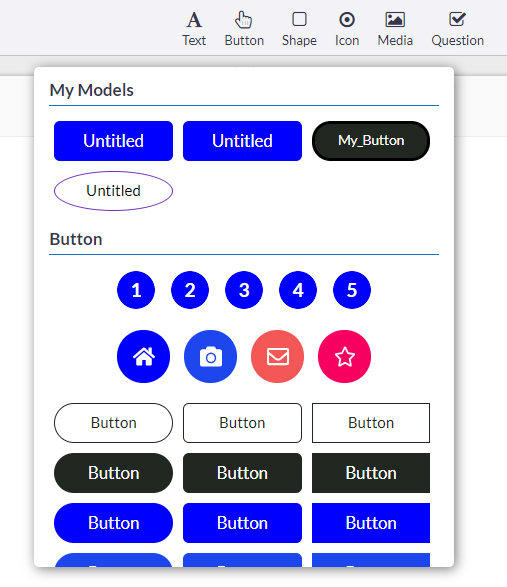
Interactive video hotspots
- Choose from a wide inventory of preconfigured interactions
- Create links with no programming required
- Personalized videos with dynamic variables
- Chapter your videos to help learners find content more quickly
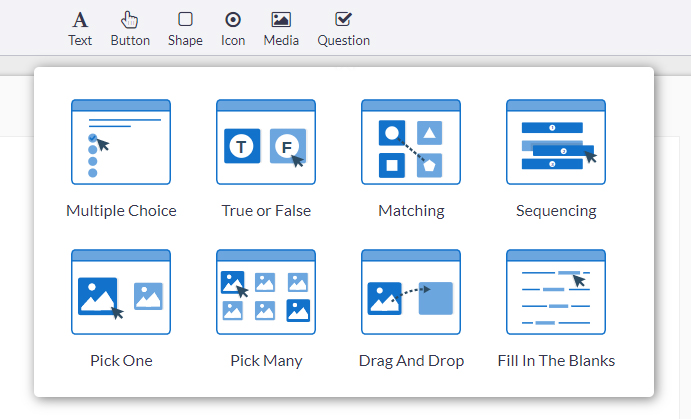
Question Interactions
- Knowledge check as the learners are watching
- Ask learners to find the answer within the video
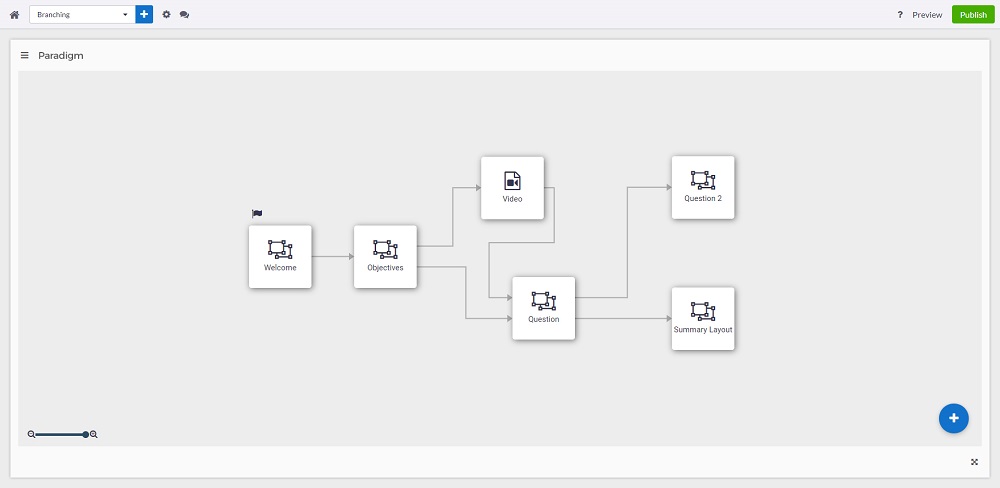
Branching video
- Break from the linear video experience by letting learners drive and choose their own paths
- Visualize the learning paths with the branching editor
- Branch to different pages depending on question answer
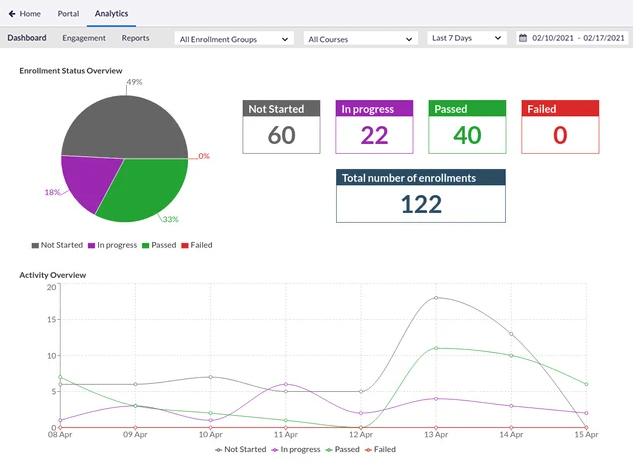
Deploying and Tracking
- Export to HTML5, SCORM 1.2, SCORM2004 and xAPI
- Host your video in Absorb Create Delivery or a third-party streaming provider (Brightcove, Youtube, and Vimeo)
- Check learner progress and metrics via the Analytics Dashboard
All of these features are available in Absorb Create. If you haven't tried it yet, you can do so via our free 21-day trial.
Highlights
You're using video for 'learning', but the focus should be how to turn attention into measurable engagement and behavior change.
- Interactive video increases engagement because learners actively click, choose, and respond during playback. Replace passive videos with interactive formats.
- Two-way video improves retention as learners receive immediate feedback on choices. Add knowledge checks inside videos to reinforce understanding.
- Branching video personalizes learning paths because users control progression through decisions. Design scenarios that adapt content based on learner responses.
- Interactive hotspots convert attention into action by linking additional resources directly inside video. Use clickable overlays to guide deeper exploration.
- Existing videos become scalable learning assets when transformed into interactive experiences. Repurpose YouTube or Vimeo content instead of rebuilding courses.
- Tracking defines interactive video ROI since completion and engagement data expose gaps. Export SCORM or xAPI data to measure outcomes.
- Interactive video removes linear limits by letting users navigate chapters and paths. Add chapters to reduce friction and speed discovery.